
Autism and Change: 5 Strange Ways I Find Certainty As a Nomad
Autism and change is a funny subject. I actually like it — when I’m the one who creates it.
But as a nomad, I’m often asked: “How do you cope with moving all the time?”
Great question. On average, I move once a month— sometimes more, and sometimes less. I crave certainty in my environment, and particularly from others’ behavior. My autistic life is marked by constant unexpected changes, so not knowing what’s coming next adds stress.
The flip side of this stress is that everyday life on the road is filled with serendipitous moments, which I truly enjoy if I’m in the right head-and-body space.
I know you want concrete steps, so here are 5 ways I deal with it:
- planning and circles of control
- anchoring routines
- practical minimalism
- minimalism as a practice and routine
- feeling at home inside your body
First, let’s discuss an unspoken and incorrect assumption: that staying at home offers certainty and is the best option for autistic people to grasp inner physical, mental, and spiritual peace. It may work for some, but it’s definitely not universal.
Staying At Home?
Note: As with all my articles, it’s important to acknowledge that oppression in all its guises prevents and constrains many different forms of mobility. My experience is certainly just one, and a privileged one at that. Having said that, I write these stories to spark ideas or inspiration for you in your own understanding of what travel means to you.
Travel brings all the cliches to mind: a stunning sunrise, jiggling water droplets on a spiderweb, or the ocean’s roar. If you’re familiar with autistic joy, you’ll know we can get the tiniest pleasure in these tiny peekaboo moments.
When you travel full-time, you can access many more of these moments. Instead of becoming distractions, they become part of your day.
Okay Rose, you say, that’s great. But I’m worried about where we’ll get our next house sit. Will it be easy to get to? Will I have to interact with the hosts for days? Will the dogs bark? Will there be a place to put my things? Will the animals like me? Will the house be messy? How close is the supermarket?
All legitimate concerns. But you see, there’s certainty in the uncertainty of living on the road. You don’t know where you’ll be, so you spend joyful time planning and dreaming about it. You are certain you’ll find a place to go. If you don’t, you’ll still be in your body. You’re still safe. You still have options.
The more you do it, the more you settle into a deep level of certainty.
Certainty that if the dog barks, we’ll soon be moving on.
Certainty that if the house is a mess, we’ll soon be moving on.
Certainty that if I have to socialize, it’s just once.
Certainty that if I miss the train, there will be another one (unless it’s a bus…)
Certainty that if the boiler doesn’t stop that humming noise, we’ll soon be moving on.
I’ll tell you what makes me feel a vague sense of uncertainty: staying at home.
If our new neighbor at home has a dog that barks, what will I do? How will we solve it? Will we have to move house?
If our home is messy, we have to negotiate chores constantly. Which creates endless irritation. Or, if we inevitably accumulate more stuff, the house becomes more messy.
If I’m at a permanent home, I have multiple social obligations — and not ones that I enjoy — that build up over time.
If I’m at a permanent home, I still have to travel, whether it’s to the store or a friend’s place. If I need a car, I have to deal with the uncertainty of it needing upkeep or that if it breaks down, I have to take care of it.
If I live in a permanent home, and the neighbor’s flat has an irritating machine noise, there’s not much I can do about it. Permanently.
If all your worldly possessions are lodged between your feet under that train table on your way to the next house sit, there’s no better feeling of certainty.
Certainty that you’re right here, right now.
Like befriending anger, you befriend your uncertainty.
It’s a practice, but one well worth the rewards. I’d never suggest that it rids you of anxiety — instead, it gives you a firmer footing to talk to your anxiety.
Let’s look at concrete ways to make this happen.
1. Planning and Circles of Control
I love to plan travel. My vivid imagination flies me to the place, and I get to experience it beforehand.
And it also brings me a sense of control.
The need for control is viewed as negative, but my post-diagnosis self has a different opinion on this, and it applies to anyone subject to random acts of violence from dominant society.
If your life is fundamentally one of surprise, what’s wrong with trying to control one corner of it?
Planning helps you do this, but it can also overwhelm you.
When this happens, I use what coaches call the “circles of concern, influence, and control” exercise.
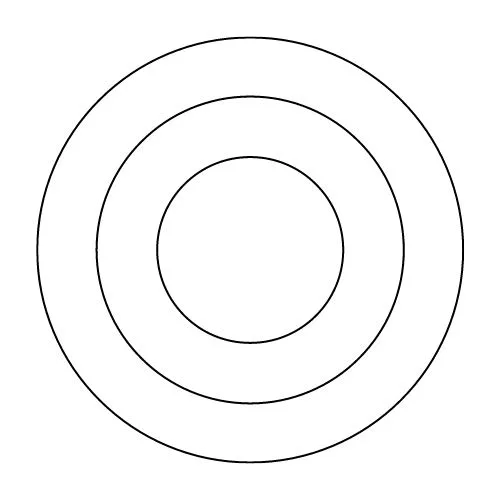
First, draw three nested circles like this:
Then, put the trip you’re planning and all the logistic points inside the circles.
The center circle is the one you have complete control over, the second is where you have some control, and the third is completely beyond your control.
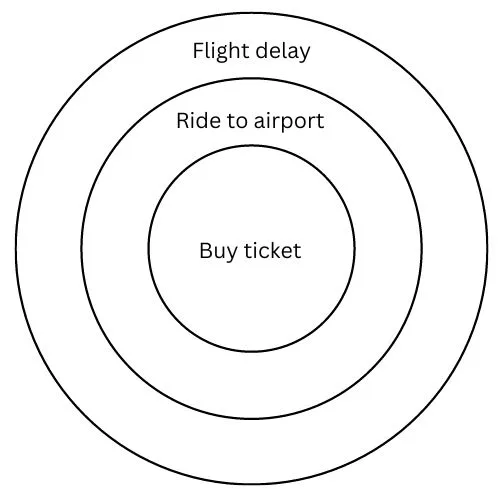
You have complete control over the flight time and airline in this example. One step out, you have some control over getting to the airport: you can choose how you get there, but you cannot guarantee it will be on time. So the best thing you can do is choose something as reliable as possible, have backup, and leave room for error.
On the third level, we have all the unknowns you cannot control: will the flight be canceled or delayed, will you be held up at security, will they force you to check your bag, will the flight arrive on time, and so on (I didn’t even get into the scary ones if you’re afraid of flying!).
When I plan, I focus on the inner and middle circles.
That middle circle is key because once I’ve done everything I can to avoid a problem, that’s absolutely all I can do.
Now, I get it. We ruminate, we circle around and around, and I’m not suggesting you can or should stop.
What I am suggesting is that this exercise gives you clarity that an autistic brain craves. It has clear lines between control and non-control that serve as helpful inner reminders.
If that’s not enough for you, don’t worry — we have more!
2. Anchor Routines For Autism and Change
In Atomic Habits, James Clear cites BJ Fogg’s work on power of “anchors,” which Clear calls “habit stacking.” Here’s what Fogg calls an anchor:
“In the Tiny Habits method, you pick an existing routine to remind you to do the new tiny behavior. We call this existing routine an anchor because it’s something solid in your life to which you attach the new habit. For flossing, a great anchor is brushing your teeth.” — BJ Fogg
I’ve modified this to anchor routines: modular routines I can take anywhere.
Unlike habits, which are behaviors we want to start or stop, anchoring routines are about how we want to feel. Engaging in them is a clarifying, soothing, and calming process.
We do this all the time without knowing it. Drinking coffee is a habit, but it’s more than that — it’s a way I structure my morning. This requires carrying around a ridiculous Moka pot.
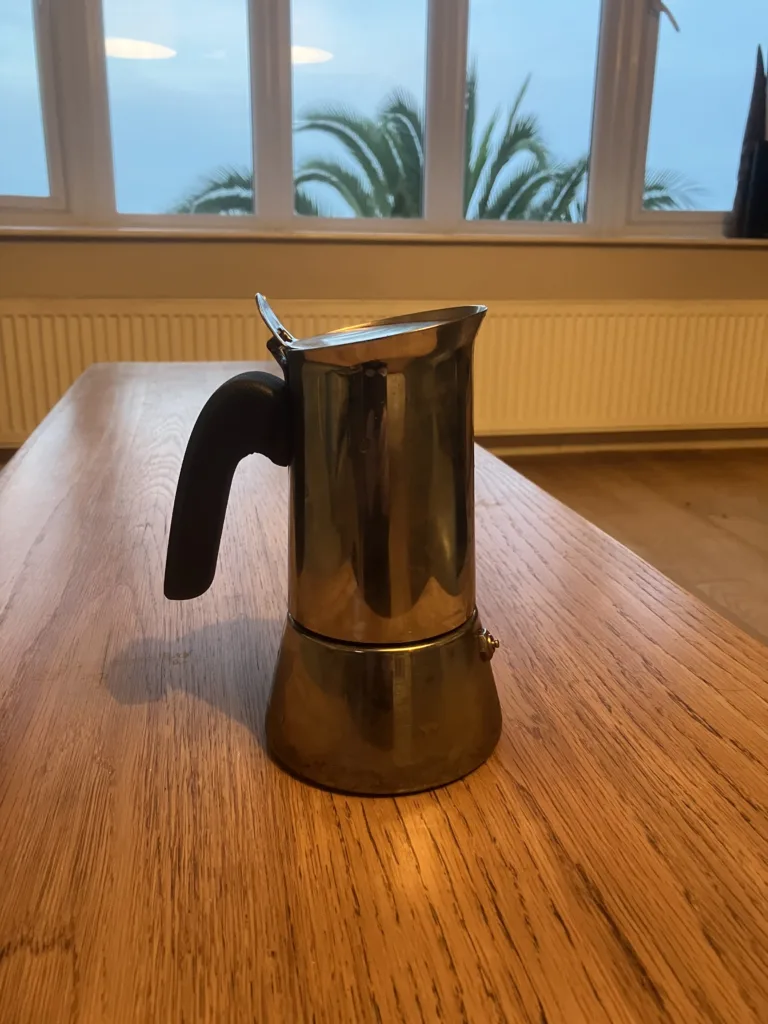
Not very minimalist, is it? But the pot in itself is an anchor, a reminder that wherever I go, I have coffee.
I also have a sleep sack, my puffy down jacket, a silk pillowcase, and a puffy camp blanket (a smaller version of a sleeping bag). These items anchor me and are part of an anchoring routine wherever I go: I have this sleeping kit.
This means I can move from place to place, where the environment, stimuli, and external routines (e.g., walking a dog versus grooming a cat) are completely different.
Though I try to keep parts of my routine intact, they’re disrupted on travel days. But what is constant are the modular anchoring routines I can carry in my bag.
I love the simplicity of it.
3. Practical Minimalism
As an autistic person, my brain is a maximalist, which means my external world often benefits from a minimalist approach.
It’s not just that my brain is maximalist — my sensory system is, too. That’s why I’m rarely bored, even walking the same route daily. I notice different things than yesterday and have different thoughts. The same is true for eating the same things every day.
On the road, I’m freed from the FOMO of being on vacation or doing conventional tourist activities.
My day becomes so simple, in a way it could never be when I lived in one place. Because my expenses are so much lower, I can work less and be more flexible with that time. This lends itself to an elegant simplicity that prioritizes a calm nervous system.
It’s the opposite of what you might expect.
Living in a state of motion from month to month actually makes my individual days and weeks simpler. There’s no internal or external temptation to “fill it” with various “shoulds” that naturally seem to accumulate (much like physical items seem to accumulate) when you’re in one place.
Have you ever noticed the social, emotional, and physical noise and clutter surrounding a fixed-location experience? Once you live on the road for any period of time, you begin to notice a shedding of those layers.
I’m not suggesting that emotional and social entanglements are negative — far from it — I’m just saying there’s a strange consumerism and expectation machine that’s completely invisible when you’re living inside it.
4. Minimalism As a Practice and Routine
Open loops are my nemesis. My kryptonite.
“Work tasks are open loops. Domestic chores. Governmental crises playing out over the news. Concern for people I know. Birthday cards, pumpkins for Halloween, Christmas looming, school bake sales, PE kit on Thursdays and cat litter running out. The fact that we all have to eat breakfast, every single day, and lunch, and dinner too. I do my best to minimise the open loops, but sometimes there are too many, and they can’t be closed. At that point, people begin to chase me for the loops that they’ve already opened, and that creates a whole new set of loops, made sharp by guilt. The more there are, the more I slow down. The loops take on an air of menace. Eventually, they block out the light.”
When you live on the road, there are definite open loops, but most of them are of your choosing. And that’s the difference. Loops are stressful when you (a) don’t choose them and (b) you cannot have any control over when you close them.
Being nomadic is quite the opposite. There are no loops with possessions and shelter. You don’t have to worry about scheduling the drains to be cleaned every x month. Or to clean the fridge every x time. You don’t have to care for all of your physical possessions by constantly cleaning, repairing, putting them away or wondering what happened to that box of paperclips.
Everything you own is in one bag. That’s it.
Yes, you still need to clean the fridge, but there’s a schedule now that you put in motion when you choose the next location: you do it when you leave a house sit or a short-term rental.
And I close loops in the most satisfying way now: when I leave a house sit, it’s done. I have everything with me. I haven’t left any loops behind. I’m moving on to another place, and I know when that will also come to a close.
As far as routine goes, travel becomes a routine, a point I never really understood until about a year into being a nomad.
It’s like going to work every day (not that I want to do that again!): there’s actually so much uncertainty about what will happen at work, but there’s a routine to getting ready, commuting, and returning home.
It’s the same on the road with moving around, except it’s a thousand times more fun.
5. At Home Inside Your Body

I’m not sure how to describe this without triggering anyone, but here it goes. There’s a trite expression that home is where your partner is or that home is where you make it.
There’s definite truth to this. And I love to make a space feel at home — there’s an anchoring routine to unpacking and setting up for each house sit or rental.
But it’s more than that. When things go wrong or are unexpected during your travels (which also happens when you live in one place), I consciously turn inward, inward into the body.
Now this is complicated if you have alexithymia, anxiety, or any other somatic response that’s a chicken-and-egg scenario between thoughts and your environment.
So what’s the difference between living in one place and being a nomad?
When I lived in one place, the inner physical sensations and outer stimuli were all jumbled up. I noticed them, but I couldn’t really make sense of it or calm it very well.
As a nomad, there’s a clear delineation between external events that are out of your control — such as a ferry being canceled — and your next possible steps.
I breathe, reminding myself that this is temporary (Buddhist detachment probably comes in) and that I have options.
This then allows me to turn inside, almost looking inside my body. I notice the outside chaos, but I can better focus now on the inner sensations, and almost like inside my skin is a protective home. No one can get at me in there. It’s sealed off, protected.
I consciously turn inward, away from that heightened state of reactivity.
And I feel calm.