
Autism Hour In Supermarkets: Is Aldi or Lidl Better?
Dealing with sensory overload as an autistic shopper.
Sensory-friendly grocery shopping for autistic people is on the rise, thank goodness. As a full-time autistic traveler, I’ve been eager to try out the so-called autism hour in supermarkets wherever I might be.
A few weeks ago, I tried sensory-friendly hours at Aldi and Lidl (only two blocks apart from each other) near Dublin, Ireland.
How do they compare? Let’s take it one sensory experience at a time.
Note: First, this is just one autistic person’s experience — we have a range of sensory sensitivities and superpowers. Second, this article compares two physical grocery stores for Aldi Ireland and Lidl Ireland, so it does not represent all of their stores. Finally, I want to acknowledge that shopping in public spaces is relatively safe for me as a white ciswoman; I’m not even scratching the surface of racist and transphobic violence against autistic and non-autistic people in these kinds of public spaces.
What Does Autism-Friendly Shopping Mean?
Autism-friendly shopping is not just about sensory overload. It involves organizing the store, providing clear maps and instructions, and addressing other disability justice issues.
Aldi Ireland introduced these shopping hours in April 2023. Here’s how they describe them:
“We want ALDI to be as welcoming a place as possible for all of our customers and so from today, 24 April, we will be rolling out designated autism-friendly hours between 6.30 and 8.30pm every Tuesday across each of our 156 stores.
At ALDI we understand that our customers often have diverse needs and requirements, and by implementing these measures to want to enhance the customer experience for those who may be sensitive to noise, bright lights or other sensory information. Alongside the measures we will be introducing during the autism-friendly shopping hours, we will also be implementing the use of JAM cards throughout our stores. JAM cards increase accessibility for those with autism, learning difficulties or communication difficulties, by asking for additional patience from store employees.” — Liz Fox, Corporate Responsibility Director at ALDI Ireland
If you’re wondering what a JAM card is, it stands for “Just a minute.” You can download the app (great idea, and it also has some glitches).
How about Lidl? Lidl Ireland also introduced their hours in April for World Autism Day.
Here’s what Lidl’s policies include:
“Stores will begin implementing the following changes from April 2nd every Tuesday between 6pm and 8pm;
Reduced lighting
No in-store announcements
No music
Priority queueing for customers dealing with autism as well as extra assistance upon request
Till scan sounds lowered
Autism assistance dogs always welcome
An in-store map will also be available for children with autism to plan and organise their shopping trips which will add structure and routine to help them deal with otherwise chaotic experiences.”
We’ll cover the sensory points first and then discuss the other issues mentioned.
1. Sound: Aldi Wins
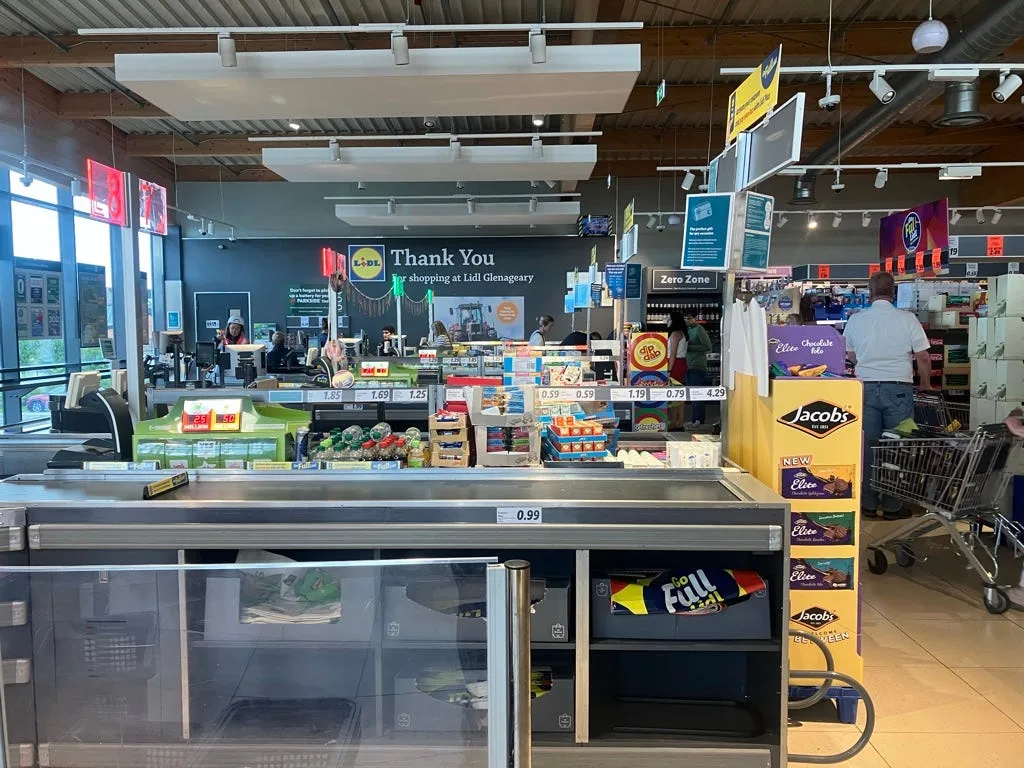
I recorded audio of both stores, one recorded at 6:45 p.m. on a Tuesday (Lidl) and another at 7 p.m. (Aldi) on the same day.
Here are my 25-second recordings of each:
Lidl:
Aldi:
If you listen to both, you can hear that Aldi is slightly quieter, though it’s slightly unfair since it was less busy than Lidl.
Both did turn off the music.
Both stores claim that the beeping checkout scanners were lowered, but they sounded the same. In fact, they were more piercing because everything else was so quiet.
I’ve often wondered how on earth an autistic checker copes with these sounds. Maybe these stores have started to explore alternatives to beeps, such as vibrations.
Sound issues also relate to increased startle reflexes. There weren’t any announcements, which can often provoke a startle response.
Regardless, there were no clear indications in either store about quiet hours, so no one knew to avoid raising their voice or making a loud noise.
2. Visuals: Lidl Wins
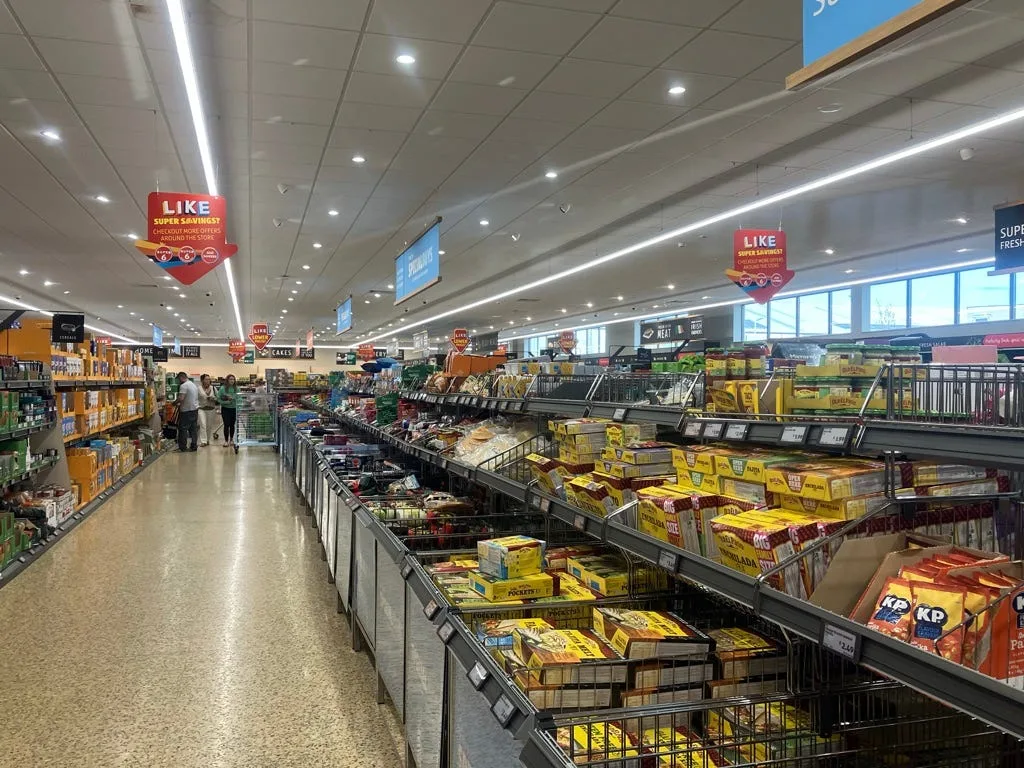
Lidl wins in this category because Aldi utterly failed. They didn’t change the lighting at all!
Seriously, Aldi, it’s better not to have autistic hours than to surprise us with the fact that you’re leaving on that horrible lighting. The whole point is to not only lower the sensory threshold but also to make shopping more predictable.
Epic fail, Aldi. You can do better.
Lidl dimmed their lights. As Kirsty Kendall says, this is a reason she likes Lidl in general.
Beyond that, the nature of grocery shopping is that it’s visually overwhelming. It would be great if they put everything together in one place (instead of random sale items scattered throughout the store), but that’s not unique to Aldi or Lidl.
As far as sensory maps go, they’re a great idea, but they simply weren’t available.
3. Smells: Aldi and Lidl Tie
I’ve never found this a problem in Aldi or Lidl (unlike department stores with perfume counters, for example). The one exception could be their bakery section — though it’s rare for me to smell it, and I’ve been in many Aldis and Lidls in my travels.
However.
If no one knows that it’s autism shopping hour, then how can they plan to be fragrance-free? There was no reason that a gaggle of shoppers doused in French perfume couldn’t have waltzed into either of those stores during their autism hours.
This leads me to the other “accessibility” issues.
4. Signs and Checkout: Aldi and Lidl Tie
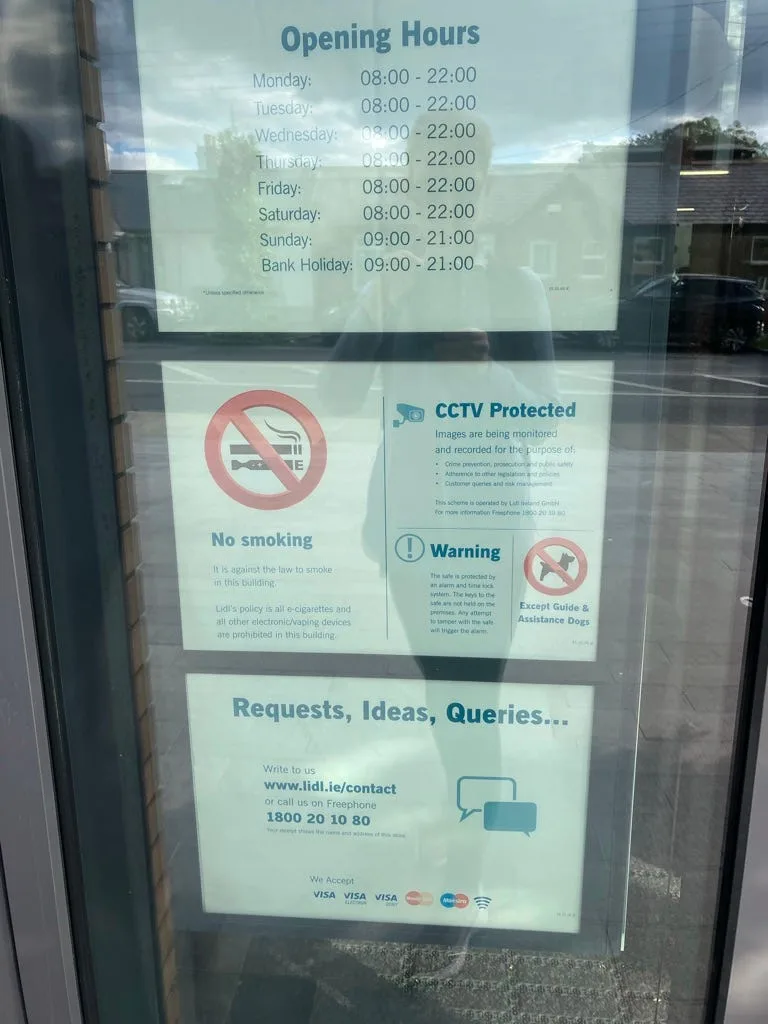
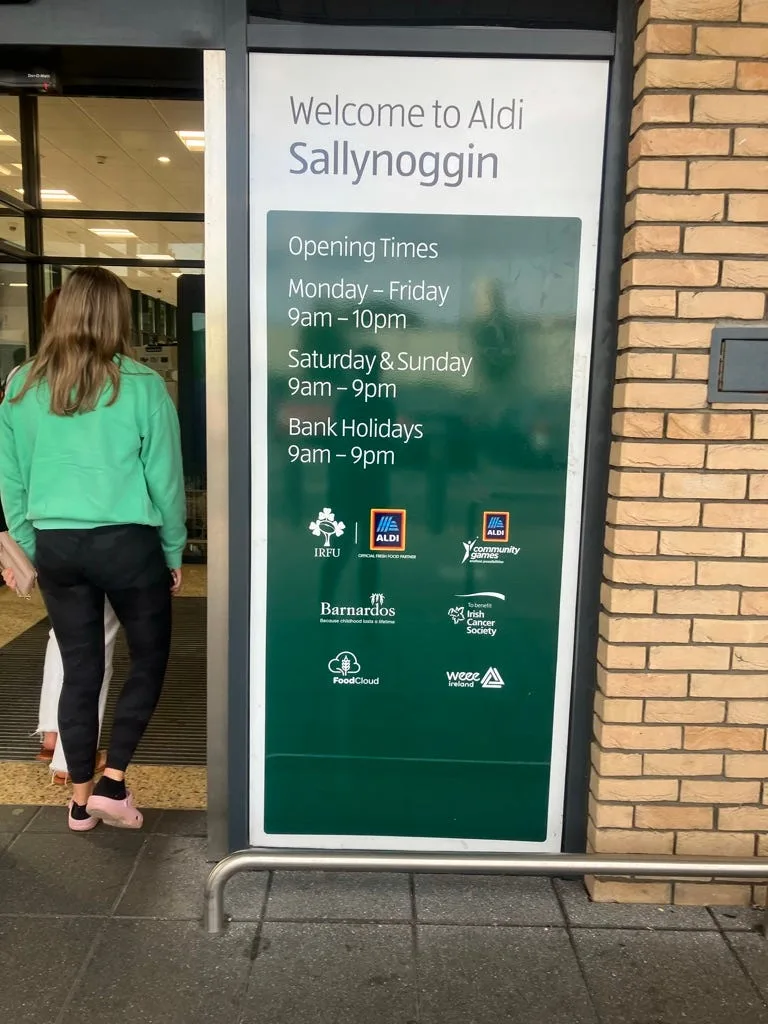
What gives? I hunted high and low for signs telling us this was autism shopping hour.
There was zero sign of it. In fact, if I hadn’t researched it beforehand online, I would have thought both stores were experiencing a temporary power cut.
For these hours to work, other shoppers need to be aware of it. It’s hard for people to respect these hours if they don’t know when they are or how to behave.
The other issue was the checkout process. It was exactly the same as it always is: have an average of 1 or 2 tills open out of 6 and have us wait in line.
It seems this process should be altered for autism shopping hours, such as creating a dedicated lane? Or something to minimize waiting so we don’t have to listen to the incessant beeping? I don’t have specific prescriptions in mind, but the point is that there definitely can be improvements.
Overall Experience: Almost a Tie, But Lidl Wins
This rating is based on comparing these two stores in Dublin and my experience shopping Aldi and Lidl across Europe. Lidl is more consistent in what to expect and overall store quality. Aldi, however, can vary so widely — one store will be quiet, pleasant, and well-organized, while another will look like the apocalypse has arrived.
But really, they were very similar. Aldi, however, completely failed since they didn’t dim the lights.
Bottom Line on Autism Hour in Supermarkets: Improvements Can Be Made
I want to give a shout-out to SuperValu, the Ireland supermarket chain that was the first to adopt autism shopping in Clonakilty in 2018. I’ve visited SuperValu shops in Ireland, but not during autism hours. They have great resources available that Aldi and Lidl could learn from in implementing their policies.
Creating awareness among shoppers about when these hours occur and what they mean is the single biggest step both Aldi and Lidl can take toward fulfilling the promise of autism and sensory-friendly shopping hours.
I hope autism and sensory-friendly shopping hours will soon be available wherever you might be.