

The Splendid Ferry to Iceland: A Sensory Review
When I first discovered there were ferries to Iceland from Denmark, I thought it couldn’t be true.
My second thought: will I get seasick?
Despite growing up in an Alaskan fishing town, I’ve never found my sealegs. So taking a North Atlantic Ocean multi-day ferry to Iceland from Denmark seemed foolhardy.
But it was the right choice.
So, what’s it like to sail from Denmark to Iceland?
Read on to find out about my 8-day experience.
If you need an autism-friendly place to stay in Seyðisfjörður, Iceland, check Lónsleira Apartments' availability and prices.
Denmark to Iceland Ferry: Smyril Line Round-Trip
Smyril Line runs a seasonal ferry to Iceland from the northern tip of Denmark (Hirtshals) to the Faroe Islands (Tórshavn) and on through to the eastern edge of Iceland (Seyðisfjörður).
You can also take the ferry from Iceland to the Faroe Islands or vice versa, as well as taking it from mainland Denmark to the Faroe Islands.
We took the full round-trip journey.

We took this round-trip ferry to Iceland from Denmark via the Faroe Islands on the MS Norröna at the end of May 2023. As far as I know, it is the only ferry to Iceland from Europe.
Is the Boat to Iceland a Ferry or a Cruise?

Many passengers travel from Hirtshals to Tórshavn (and back) as they would on a ferry. One couple said they fly one way and take the ferry on the return journey.
In other words, it’s more practical than a cruise, similar to the overnight ferries we’ve taken from Croatia to Italy. I’d say the MS Norröna leans more toward cruise than ferry in terms of amenities. That’s why it was a delight.

Iceland Ferry Itinerary
Day 1: Leave Hirtshals at 3 pm
Day 2: At sea
Day 3: Stopover in Tórshavn, 7:30 am to 1 pm
Day 4: Arrive Seyðisfjörður at 9 am
Day 5: Ferry docked in Seyðisfjörður, then departs at 8 pm
Day 6: Stopover in Tórshavn, 4 pm to 8 pm
Day 7: At sea
Day 8: Arrive Hirtshals at 11 am
If 8 days seems too long, you could take the ferry one way, as many tourists did. But we’re glad we did the round-trip.
Tip: We originally planned to stay in a hotel while the ferry was docked overnight. My partner had the bright idea of asking whether we could stay on board since we were making the return journey. After consulting with the captain, the helpful staff member said yes — and it cost only 80 euros, half of what we’d pay for a hotel. This trick only works, though, if enough people are making the return journey. I recommend making a cancelable booking and then asking the staff once you board the ferry.
Let’s move to the detailed itinerary.
Day 1: Leave Hirtshals at 3 pm
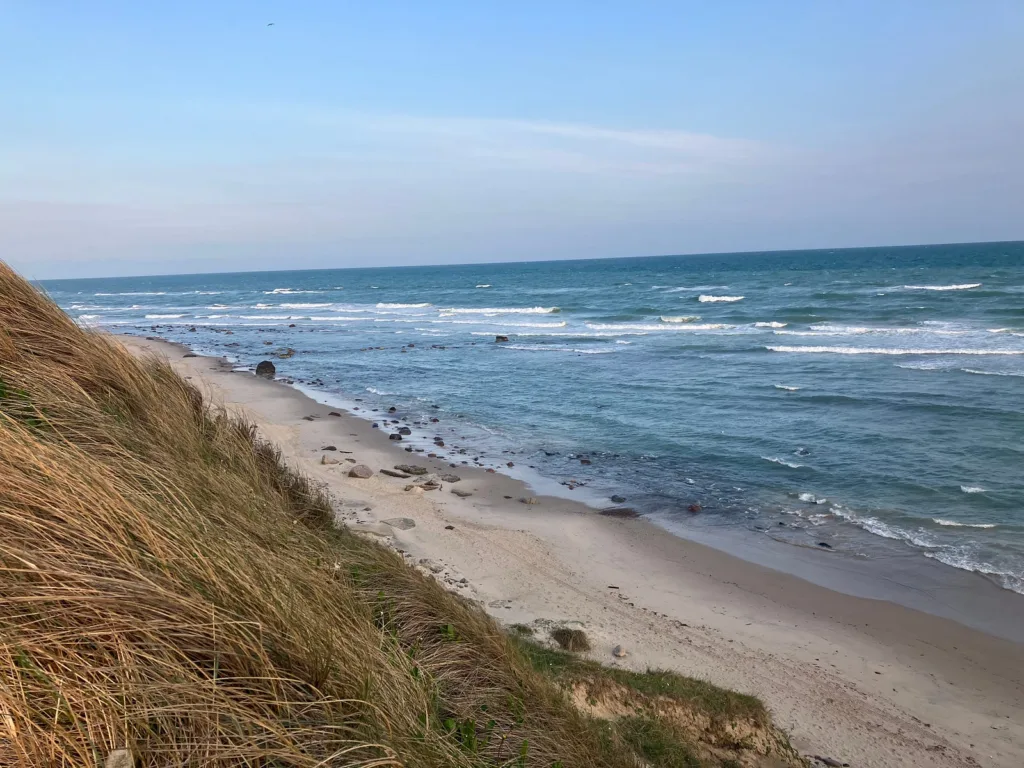
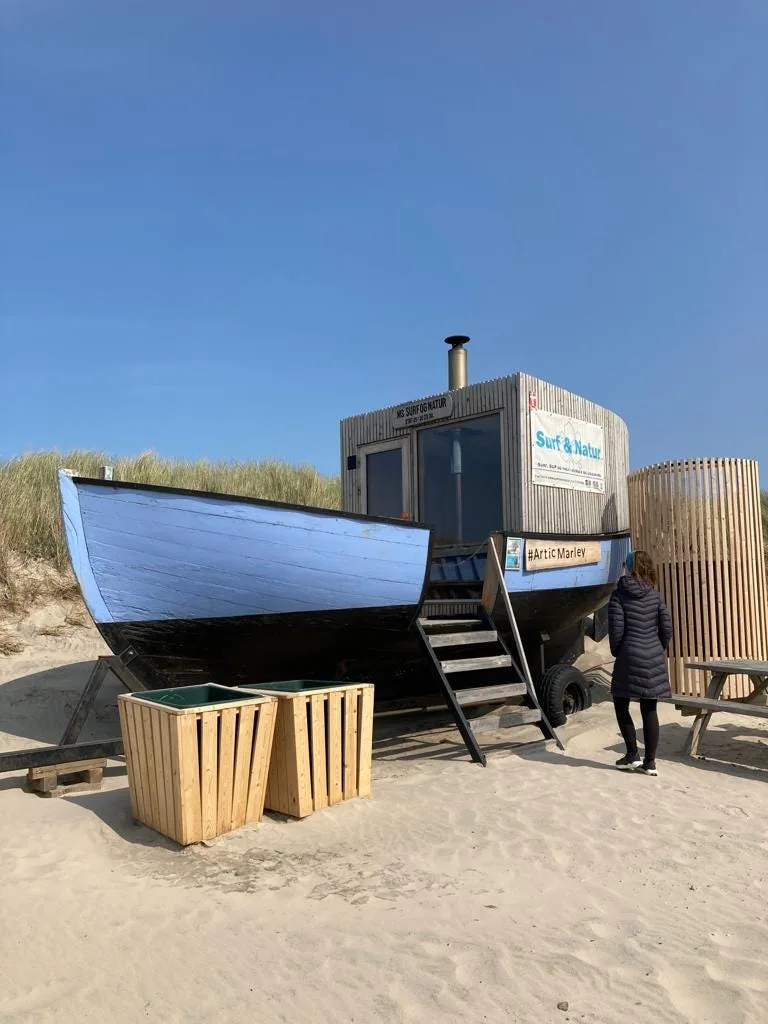
Hirtshals has a working harbor and serves as a hub for ferries from Norway and Sweden to a lesser extent. We took trains from a housesit near Nuremberg with a night stopover in Hamburg.
Because we knew it was possible we’d miss one of our connecting trains, we planned to arrive two days early (especially since we needed to leave our previous housesit). We’re glad we did because Hirtshals’ beaches are stunning, and we stayed in the loveliest B&B.
The B&B was inexpensive and included a delicious breakfast (with local liqueur). The hosts were incredibly friendly and even drove us to the ferry terminal on the day we were to leave.
If you want to book the Hirtshals B&B, you won’t find them on any hotel sites — you have to go directly to their website.
That evening, we dined at the Skansagarður buffet restaurant, courtesy of an invite from one of the very helpful stewards after she learned I planned to write about our ferry trip. The Norrona has three restaurants and two cafes on board:
Restaurants
· Nóatún Cafeteria — Order pizza, sandwiches, and the like.
· Skansagarður Buffet — A sit-down buffet (read my review below). Adult dinner costs 39 euros, and it’s 17 euros for children. Breakfast is 20 euros for adults and 11 euros for children.
· Munkastova Restaurant — A fancy restaurant. We didn’t try it, but it looked good. Their three-course dinner is 67 euros per person.
Cafes
· Undirhúsið — This is on Deck 5, and has a cozy library area. You can borrow books from it. It’s also where you play bingo and also hear live music in the evenings.
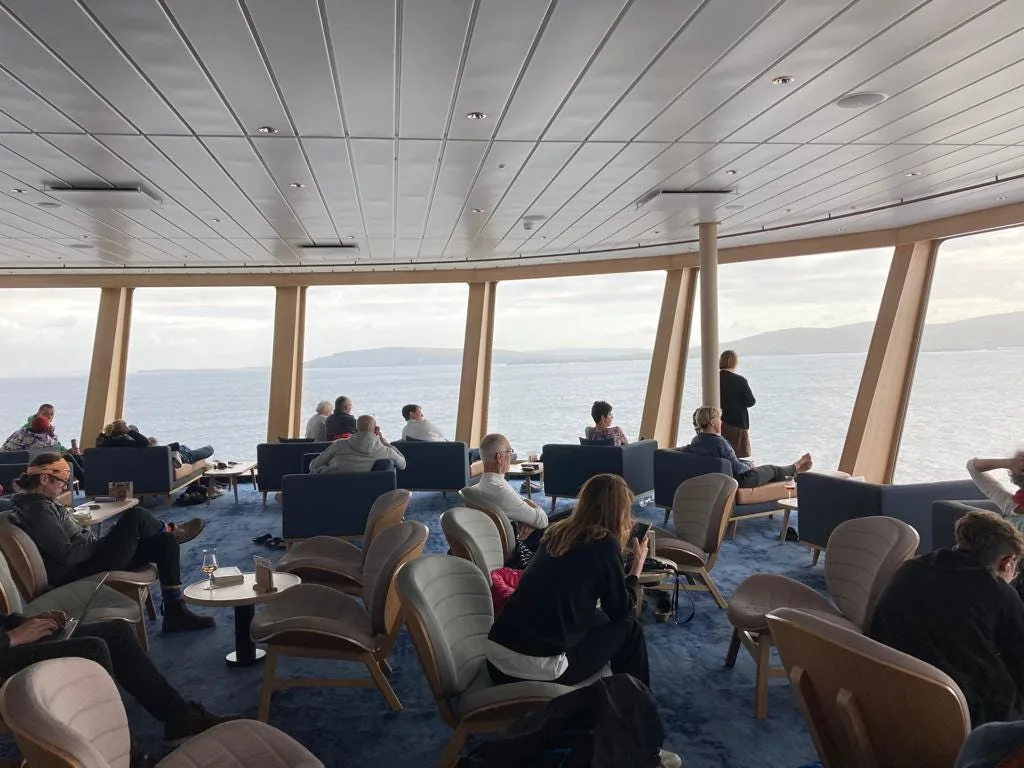
· Laterna Magica — This cafe has spectacular views from the ship’s top deck. They serve light snacks, coffee, and drinks. It’s also where people effectively “camp out” if they’re in a room without windows. Very pleasant place and the best spot to watch the Shetland Islands roll by.
If you want to eat in the sit-down restaurants, you can pre-book all your meals. You can also show up with the herd of people when it opens and usually get a seat on the spot (not recommended).
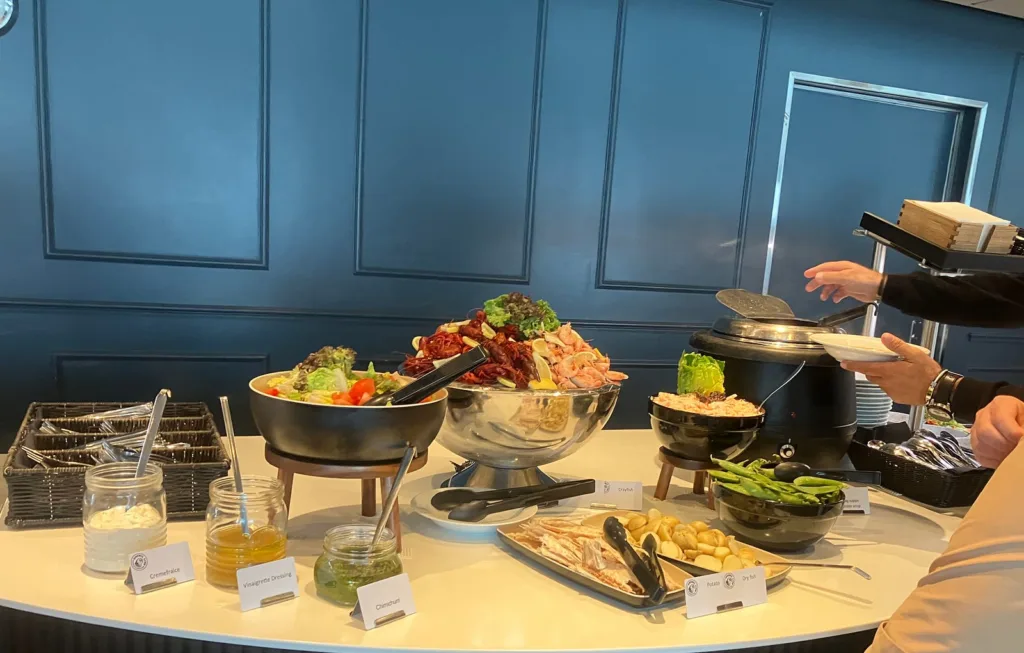
The Skansagarður Buffet had a variety of options and was high quality. My only sadness was the lack of vegetarian options, which seemed odd from mainland Denmark. To be fair, they list vegetarian options on the website as “mix salad, pasta salad, tomato salad, bread, potatoes, vegetables, bean salad, croquette, soup, cheeses and cakes/desserts.” And that’s exactly what it was. But it’s not really a meal per se. They also have lactose-free and gluten-free options.
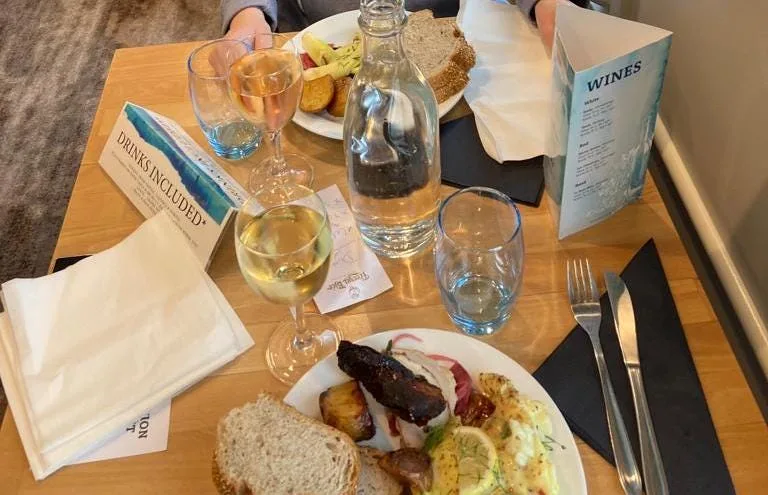
But I managed and was thrilled when I found the fresh strawberries and yogurt-like cream without sugar. I ate myself silly and was quite happy.
You have a server who brings you drink, but other than that, it’s a self-service buffet. I imagine during high summer, it might get a little overwhelming with people, but our seating was just fine. The lights, smells, and noise levels were all manageable.
Day 2: At Sea
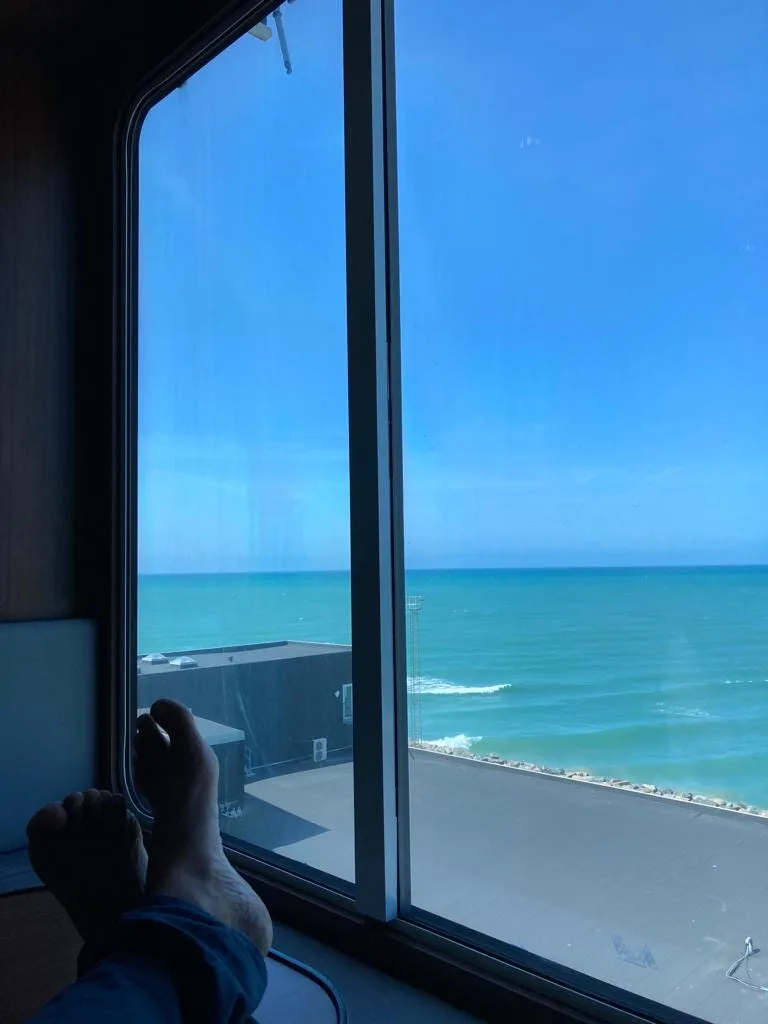
Day 2, your first and only full day at sea on the journey to Iceland, was beautiful but also a bit rough. I was still getting my sea legs, and it didn’t help that the waves were high. The boat was rocking.
Before buying the ferry tickets, I learned enough to know that the only way I’d make this journey was if we had a cabin with a window seat where you could look ahead and keep your vision in line with the horizon.
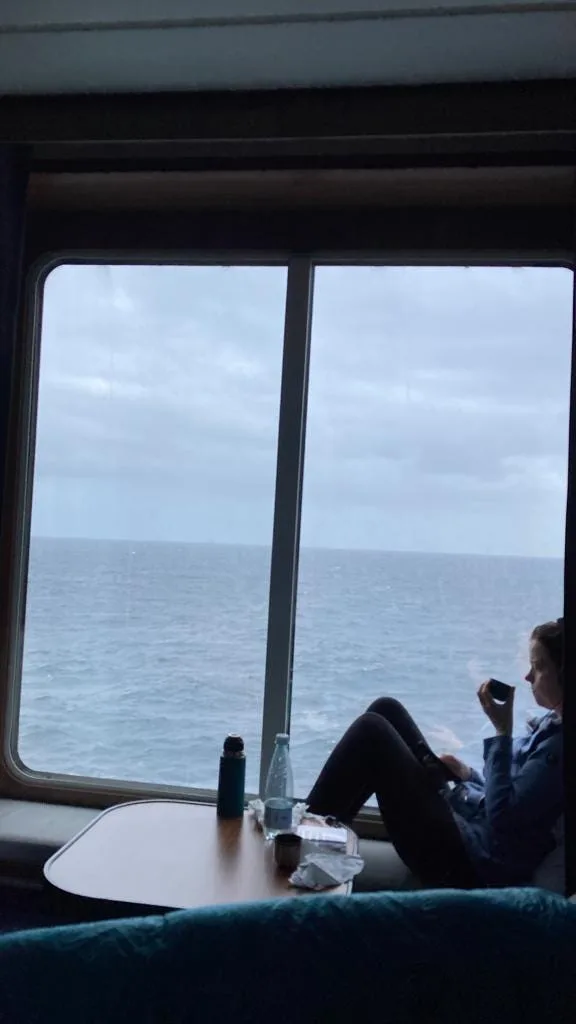
Having this option helped a great deal. I also wore seasickness wristbands, which I also saw others using on the journey.
The wristbands were adequate in smooth seas, but not on that second day. So took seasickness medication, which I’ve taken on boats before. It helps, but it makes me so sleepy that I’m basically a semi-conscious zombie most of the day. Which was actually fine since we were at sea.
We went up to the lounge with spectacular views. From there, we watched the Shetland Islands go by as we sipped our coffee.
After taking the medication, I was still determined to go downstairs to play bingo at 2 pm. There’s also a cinema, but I knew being inside with the ship rolling would have put me over the seasickness edge.
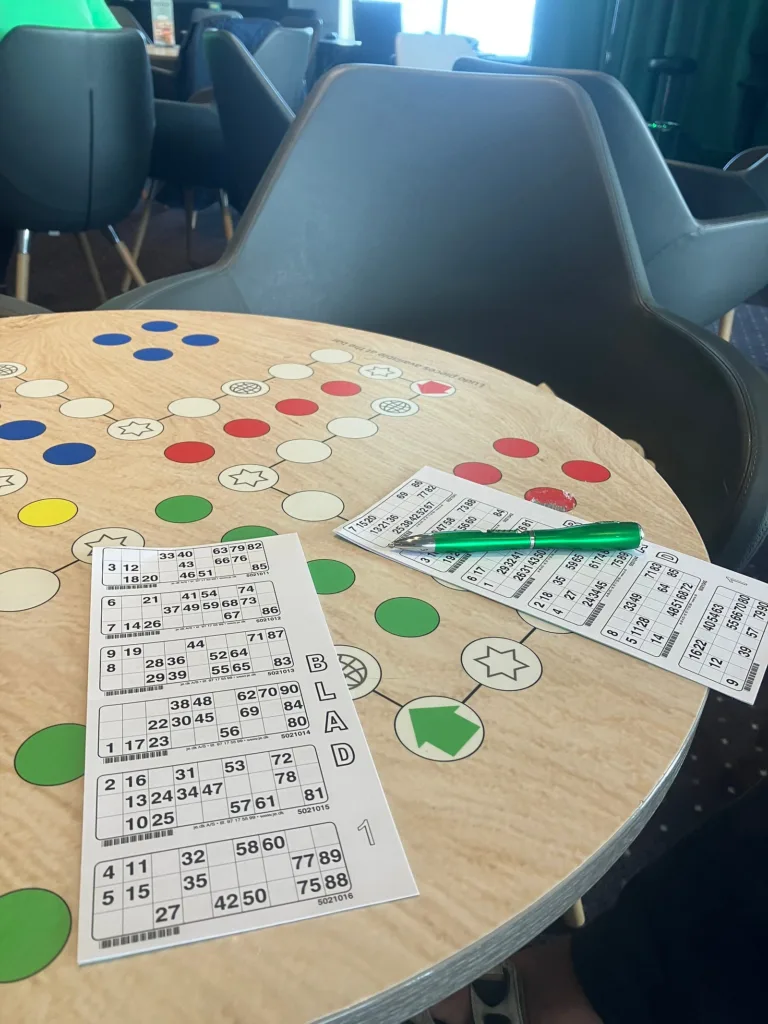
Seva had never played bingo before, and we were fortunate that the numbers were called in Faroese, Danish, and English. It gave us enough time to keep up.
Four cards cost 12 euros in total. The prizes were vouchers to spend at the restaurants on the ship. Unlike my other experiences with bingo in the United States, this was a quiet, intensely tense affair, with a snoring man in the corner and frantic knitters sprinkled throughout the lounge. An older player won three times in a row!
Day 3: Stopover in Tórshavn, 7:30 am to 1 pm
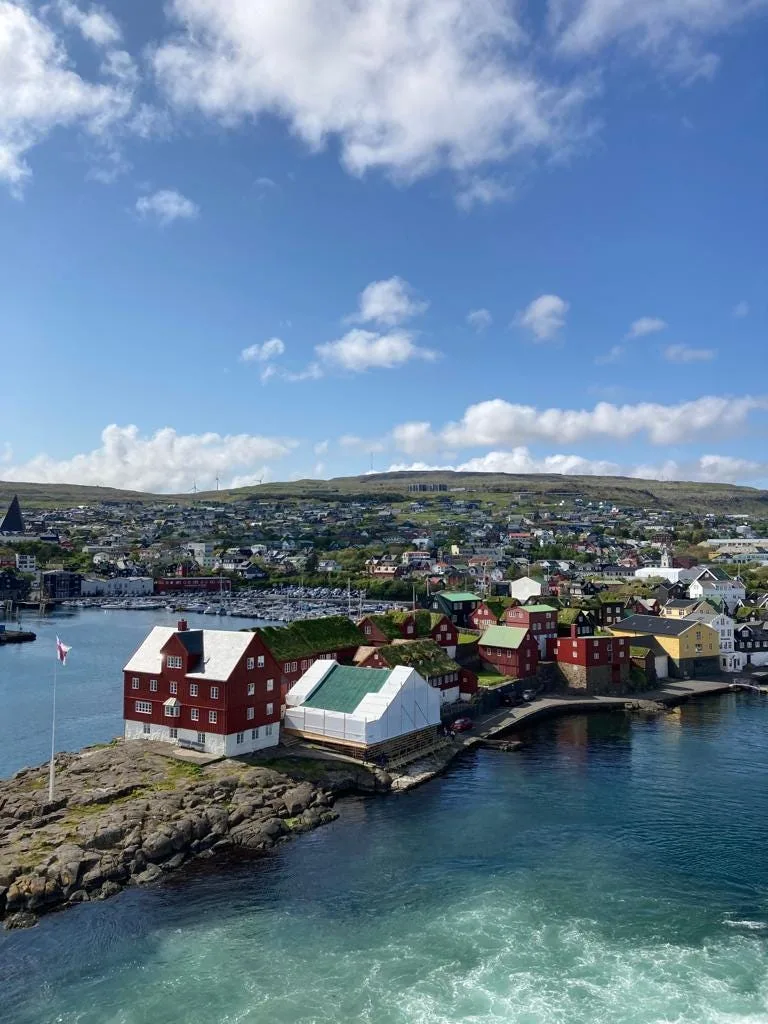
We arrived in the Faroe Islands on time, but the wind was so strong that unloading the cars took extra time. We all waited on the stairs to disembark, wondering what had happened, until a seasoned traveler told us not to worry (see my sensory issues review later in this article).
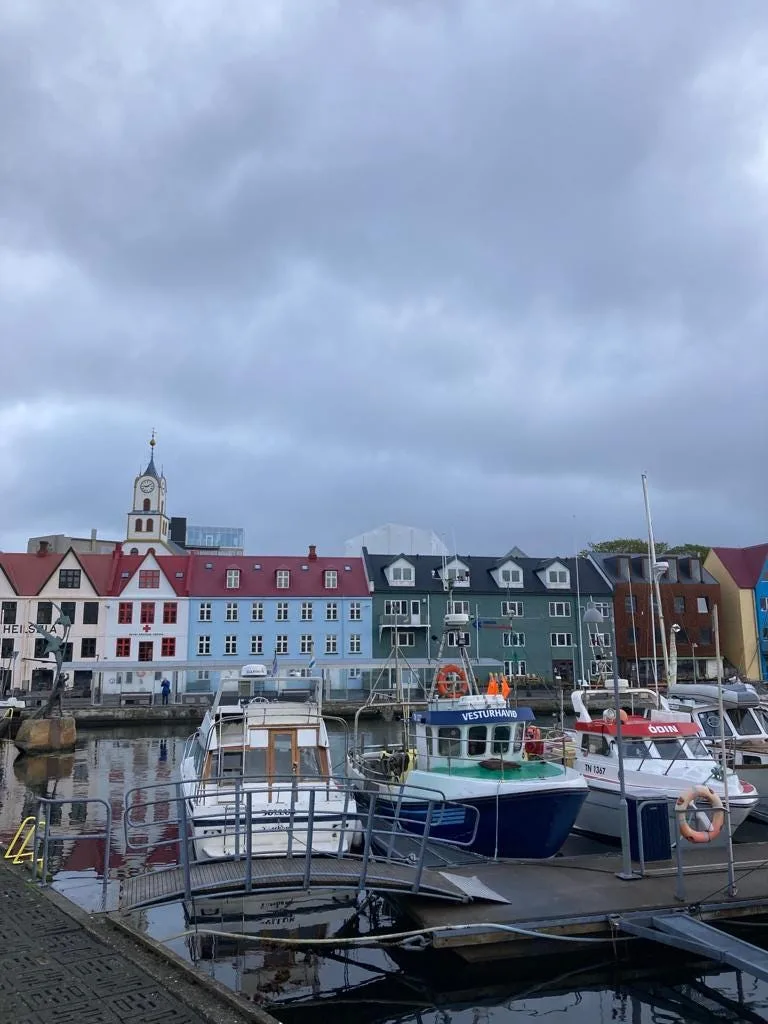
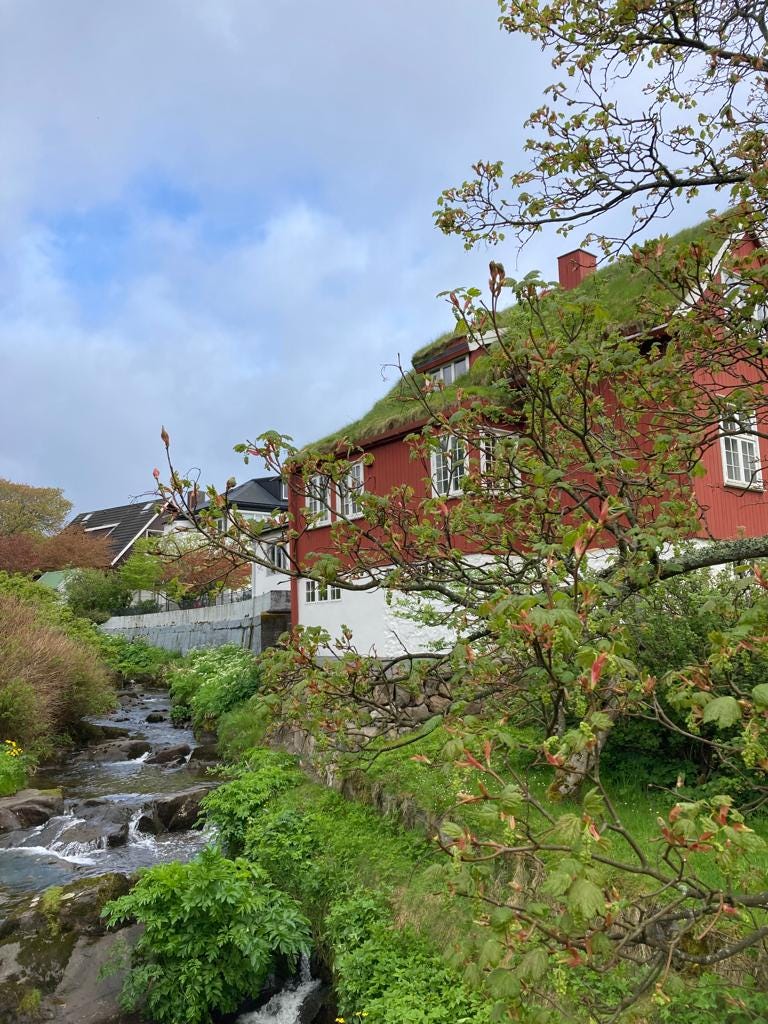
Tórshavn means ‘Thor’s Harbor’ in Faroese. I wasn’t sure what to expect from the Faroe Islands, except that it would be green. And what a luscious green it was.
The ferry docked near the town center, so we walked up through it to a beautiful, magical hobbit-like park on a hill.
Winding our way back through the town, we stopped at the grocery store for maximum food supplies. There were quite a few to choose from, but you’ll want to make sure they’re open when you’re scheduled to arrive.
With our delicious finds packed in our bags, we headed back on board. After a rock-and-rolling night on the seas (thank goodness I was lying down), we arrived to the calming fjords of Iceland the next morning.
Day 4: Arrive Seyðisfjörður at 9 am
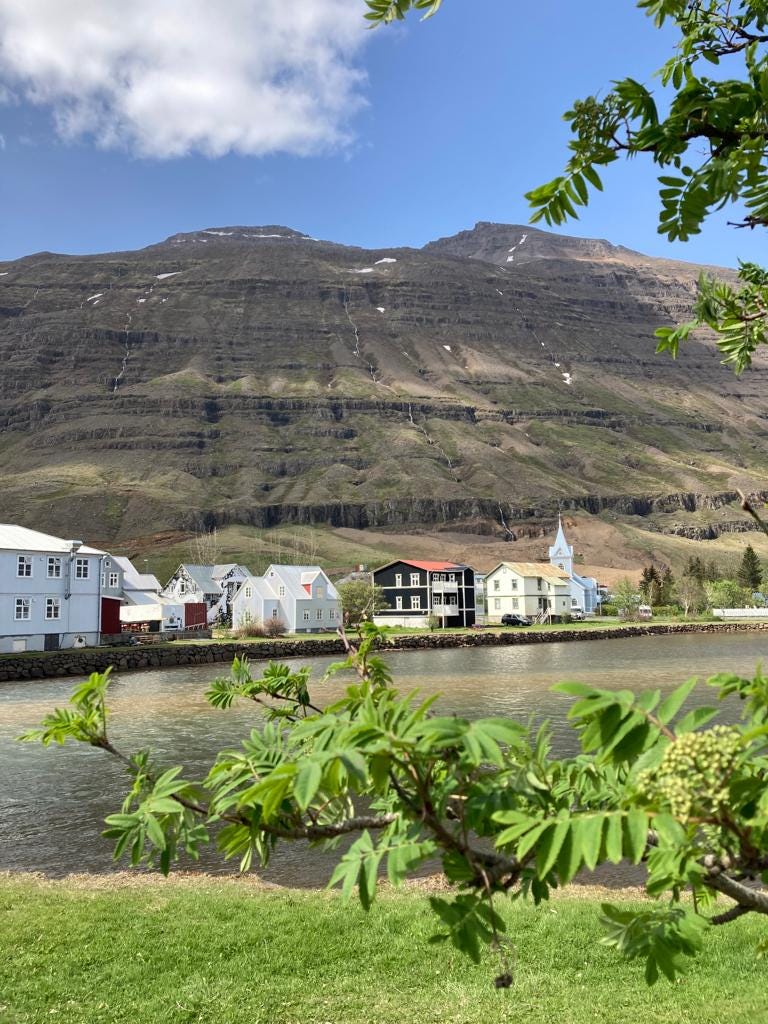
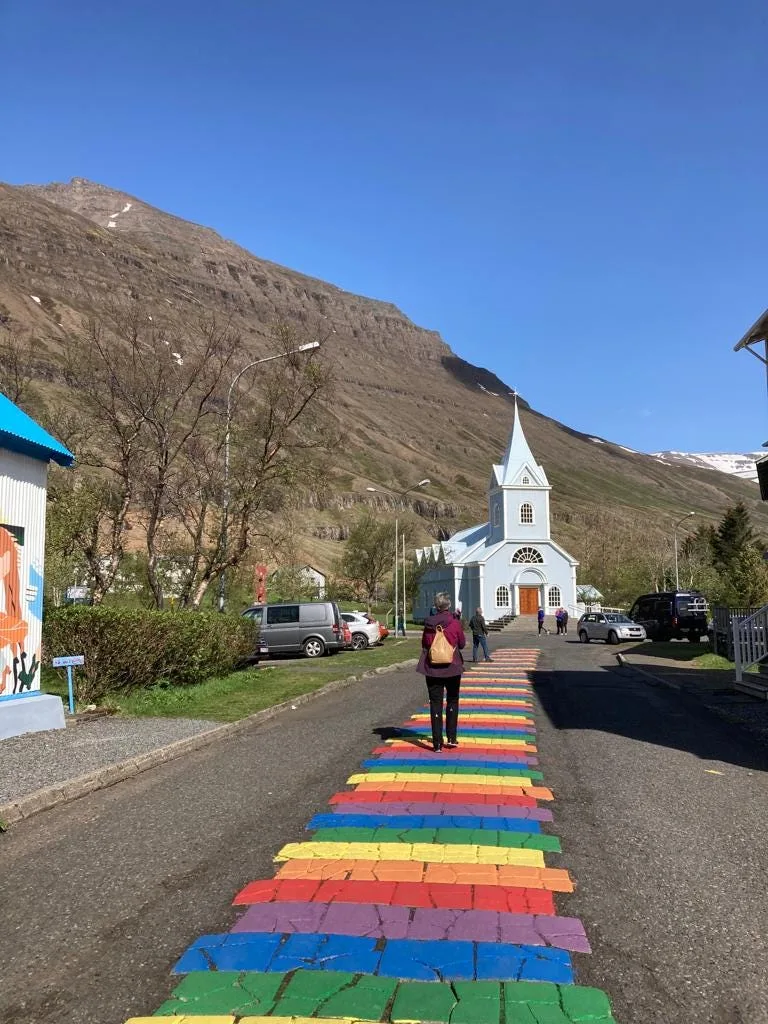
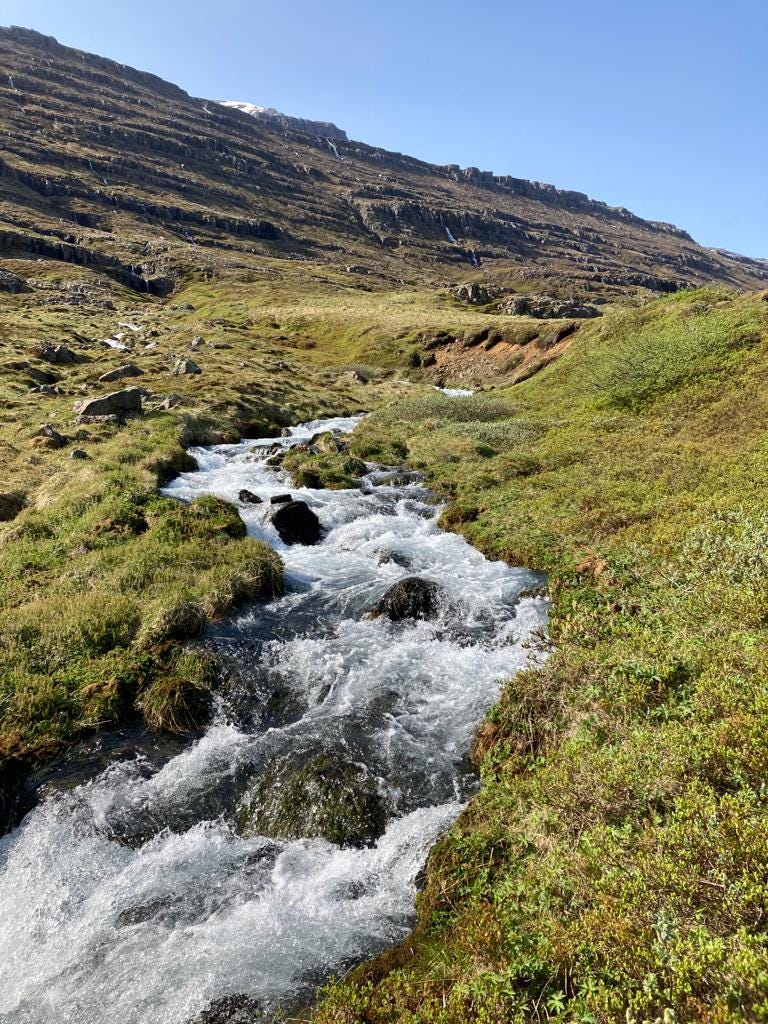
Seyðisfjörður provided a sharp contrast to the Faroe Islands: the Faroe Islands were lush, smaller, and covered in green, while this part of Iceland was full of waterfalls, mountains, and snow-capped peaks.
Both are magnificent.
We spent the day hiking towards one of the falls along one of the many trails around the town. When exiting the ferry, there’s an info desk with a map. Though the person at the desk was eager to help, our hike would have been better planned if I’d just paid attention to the map.
The changes in weather were reminiscent of Ireland, so make sure you dress in layers and have rain gear with you because the wind and rain will sneak up and soak you before you can take out your jacket.
After being on the ferry for so long, we walked miles and miles until we had drunk enough of the glorious scenery. The small grocery store gave us what we needed (beware, though — they can run out if a cruise or ferry is docked!), and we returned to the strangely silent and still boat.
Day 5: Ferry docked in Seyðisfjörður, departs at 8 pm
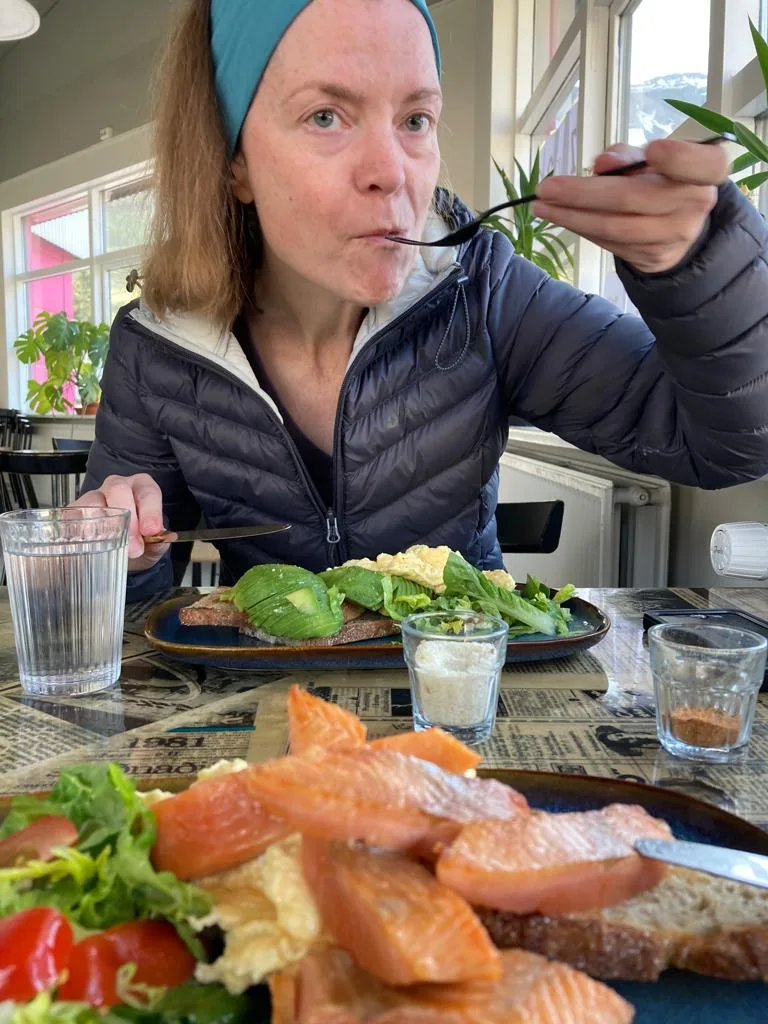
In Google reviews, I’d read about a filling/gas station serving glorious breakfasts in Seyðisfjörður. The reviews were spot on.
Don’t tell the owner that we sent you. Don’t tell him that you read about the place on Google reviews. Just roll up, smile, and chat. There’s no menu. You can definitely tell him what you want to eat, but be prepared for him to be out of something.
The more flexible and non-demanding-tourist you are, the better your meal will be.
And yes, you see avocados on my plate. The ferry brings them in for him, so there’s limited supply. But they were fabulous.
It’s not a cheap breakfast, but the atmosphere, characters, taste, and scenery make it all worth it.
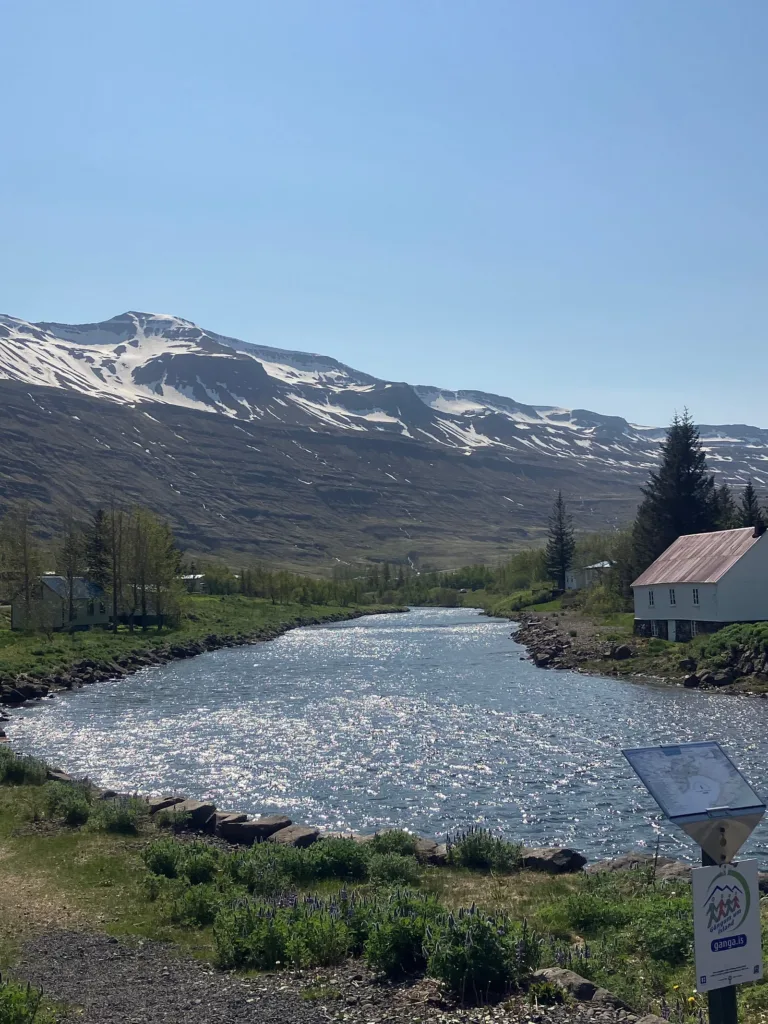
After another glorious day of hiking with a snooze in between, we said goodbye to Iceland as we sailed slowly through the spectacular fjord to the sea.
Day 6: Stopover in Tórshavn, 4 pm to 8 pm
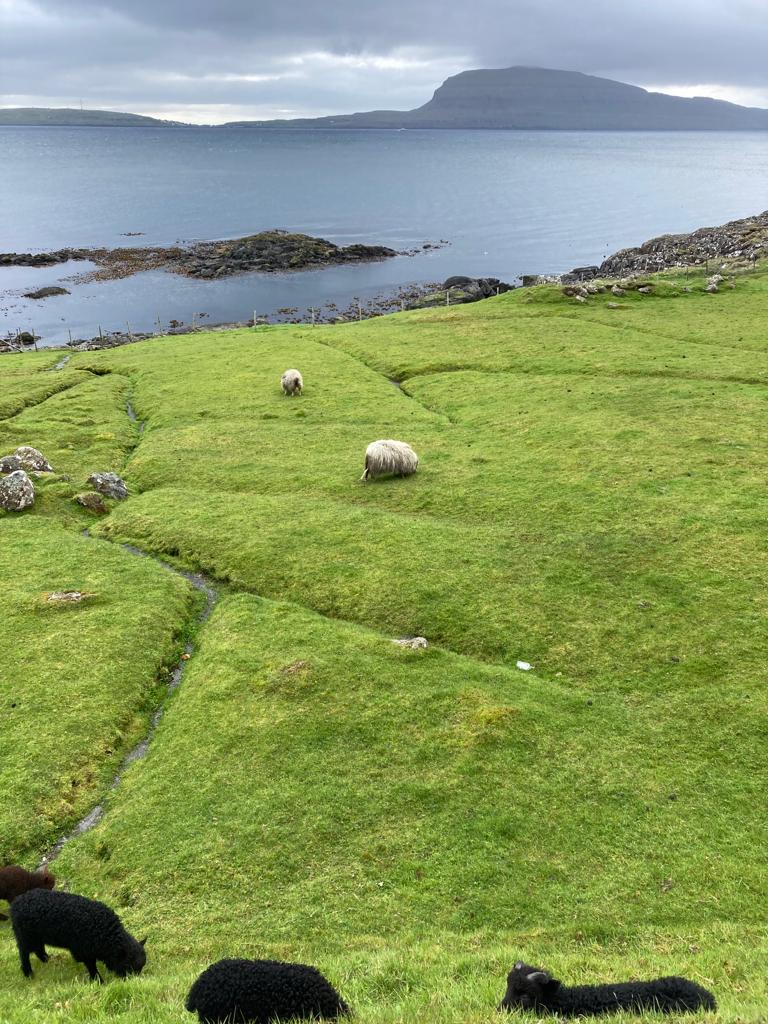
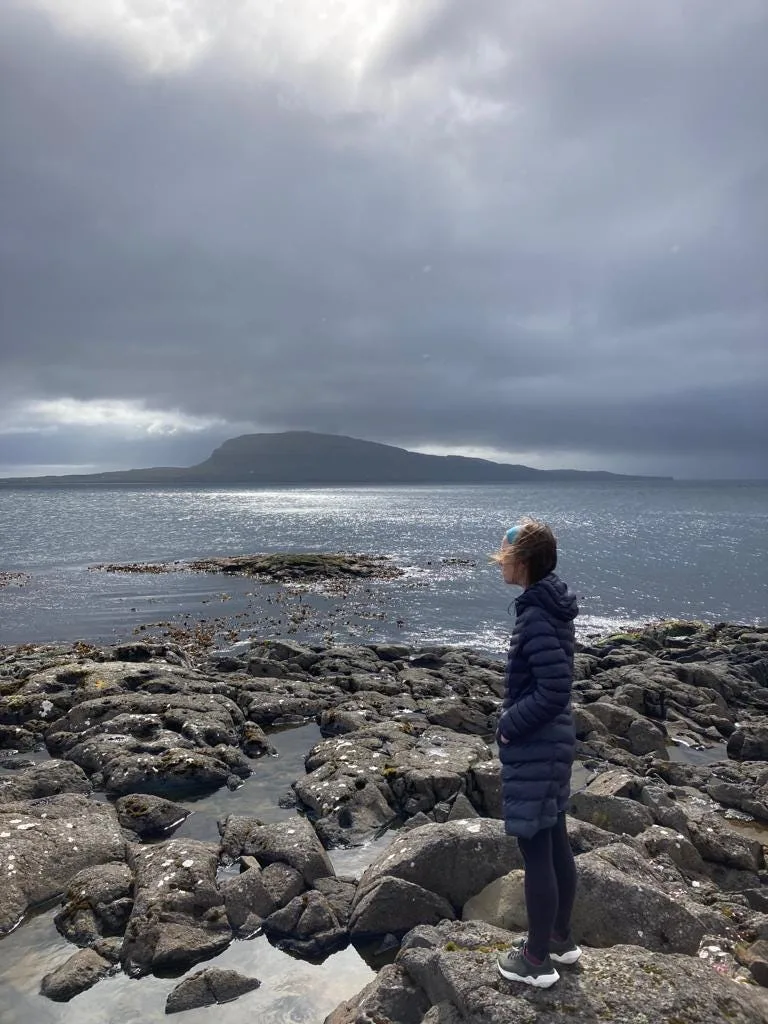
We returned to Tórshavn, now knowing a few of the best places to go. Seva had Thai food from a takeout stand, and I stocked up on supplies to eat on board. Our walking route took us along a main road that hugs the sea.
Day 7: At Sea
Unlike the ferry ride to Iceland, the waters were smooth and calm on our return.
As for activities, we’d tried the bingo, and we also tried to use the sauna on our way to Iceland since we’re major sauna-goers. The problem is that it’s on one of the bottom decks, and we tried to use it while the boat was rocking. Major mistake.
However! We caved and bought an hour in one of the hot tubs (a little over 30 euros for an hour) on an upper deck outside. The ship pumps up seawater and heats it into four hot tubs overlooking the sea. There’s partial privacy, but people still roam around on deck. I’ve wondered what it would be like to see the northern lights from the hot tub.
But even without the northern lights, it’s worth it.
Day 8: Arrive Hirtshals at 11 am
The next morning, we sailed back into Hirtshals Harbor. The transition was smooth, though you do need to leave your cabin an hour before the ferry docks. It’s a minor inconvenience, but I’m sure it’s done to help them ensure everyone gets off the ferry smoothly and make it easier for the crew.
When you exit, a bus will be waiting, but make sure it’s the one you want. The first one was going somewhere else, so we waited about 15 minutes for the one to take us to the train station.
Practicalities: The Rooms
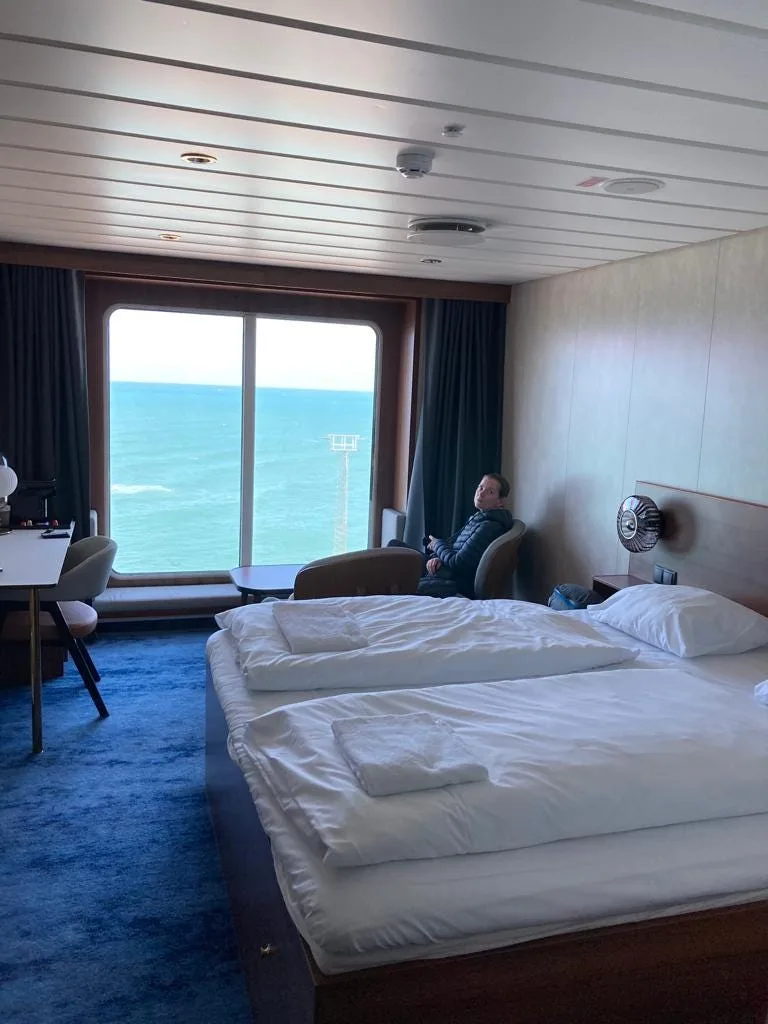
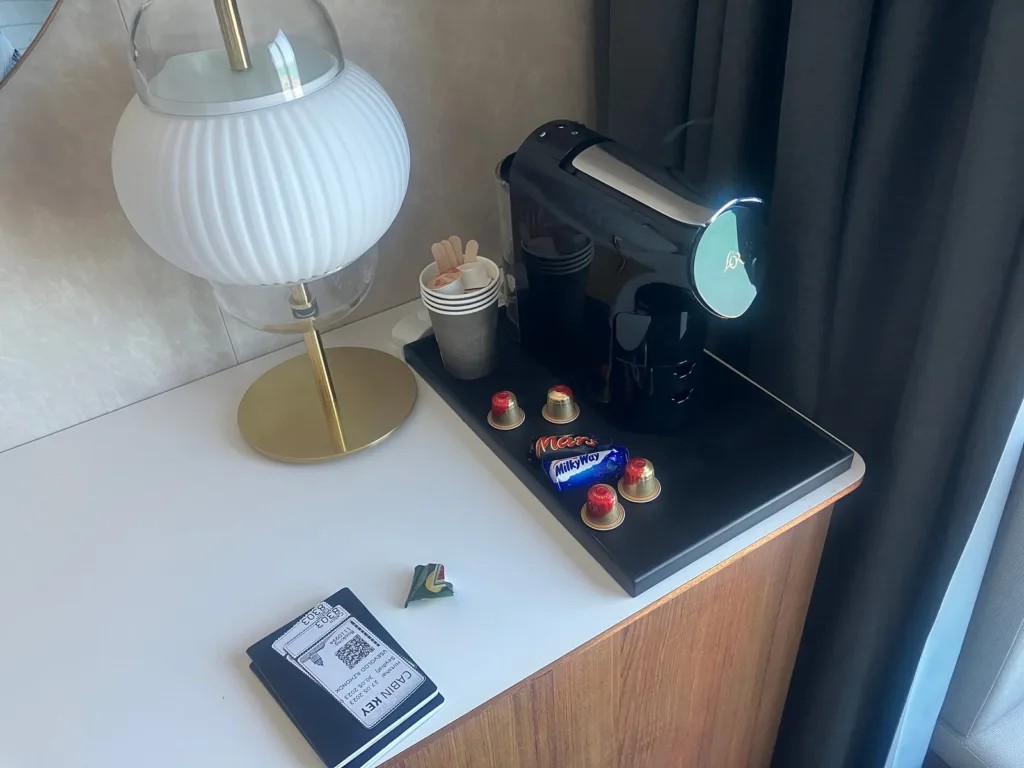
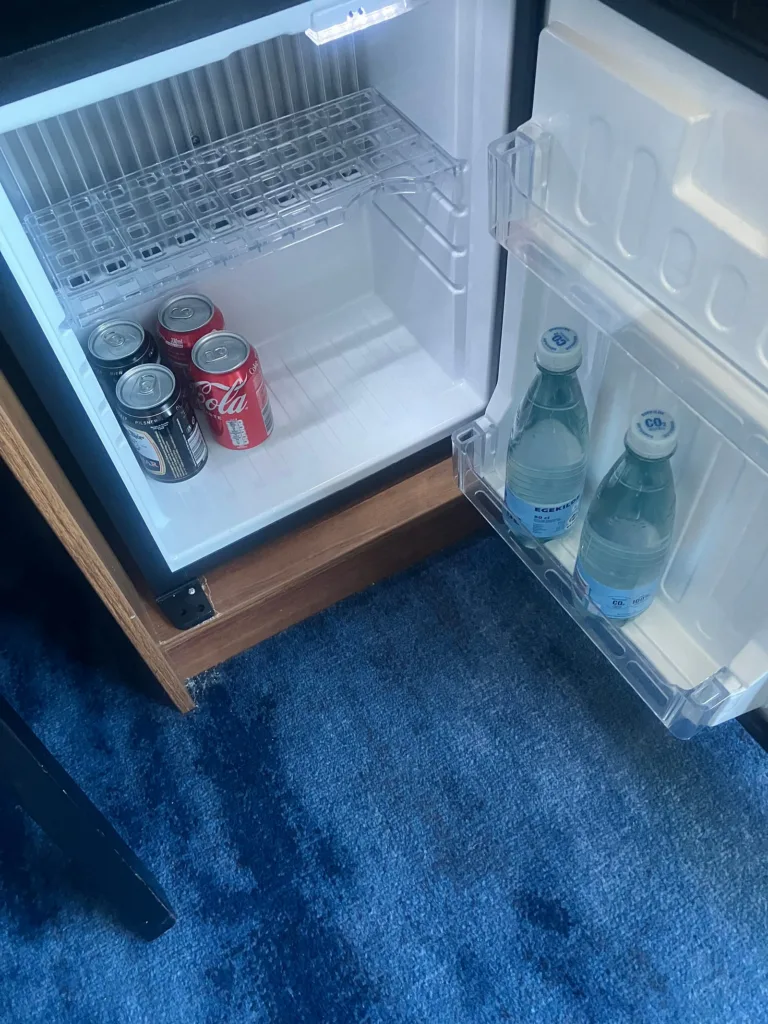
We could book the “Nordic Deluxe” cabins because of a special gift from my mom. If you’re going to take this journey (see prices in next section), it’s worth it to book these cabins — particularly if you’re prone to motion sickness.
The other cabins are perfectly fine — I saw all of the different types. The problem is that while some have windows, getting yourself even with the horizon will take some effort to avoid seasickness.
The rooms include:
· mini fridge stocked with water, soda, beer, and candy bars
· espresso capsule machine (just ask staff for more)
· very comfortable beds with breathable duvets
· window seat — essential for looking at the horizon
· bathroom with shower — very comfortable when the sea is calm
· TV
· desk area and seating area with small table
· closet area
FAQ: Practicalities
How much does the ferry to Iceland cost?
Our grand round-trip total was 2297 euros, or 1149 a person (287 per person, per day), which is not bad since it includes an activity, accommodation, and transportation all wrapped into one. It doesn’t include the 80 euros we spent to stay overnight while we were docked in Seyðisfjörður.

How do I get to the ferry?
There are buses that go from the train station on the departure day, but I recommend staying overnight in Hirtshals because if your train is late on the day of sailing, you’ll miss the entire ride.
You can walk to the ferry, but after seeing the route, I don’t recommend it. It’s not designed for pedestrians and is very confusing.
We were lucky to have a ride from our B&B because we were told it was difficult to get a taxi. If you’re not close to the train station in town, you should talk to your accommodation about it.
How long does it take to get to Iceland by ferry from Denmark?
3 to 4 days, depending on how you count it. We left in the late afternoon of day 1 and arrived in the morning on day 4.
How far is Iceland from Denmark?
1,850 kilometers or 1,150 miles (in a straight line, of course).
Are there other ferries to Iceland?
None that I know of. I’ve checked possible ferries from Norway to Iceland, from Reykjavik to the Faroe Islands, and even ferries from the UK to Iceland. Sadly, none of them exist as of 2023.
Is Smyril Line a car ferry?
Yes!
Where should I stay overnight in Seyðisfjörður, Iceland?
If you need an autism-friendly place to stay in Seyðisfjörður, Iceland, check Lónsleira Apartments‘ availability and prices.
I contacted them and other accommodations in Seyðisfjörður about noise, fragrance, and visual distractions in their rooms. Other places were helpful, but simply couldn’t provide rooms that met these criteria. If you want to read about how I research these hotels, read an overview in my Oxford hotel article.
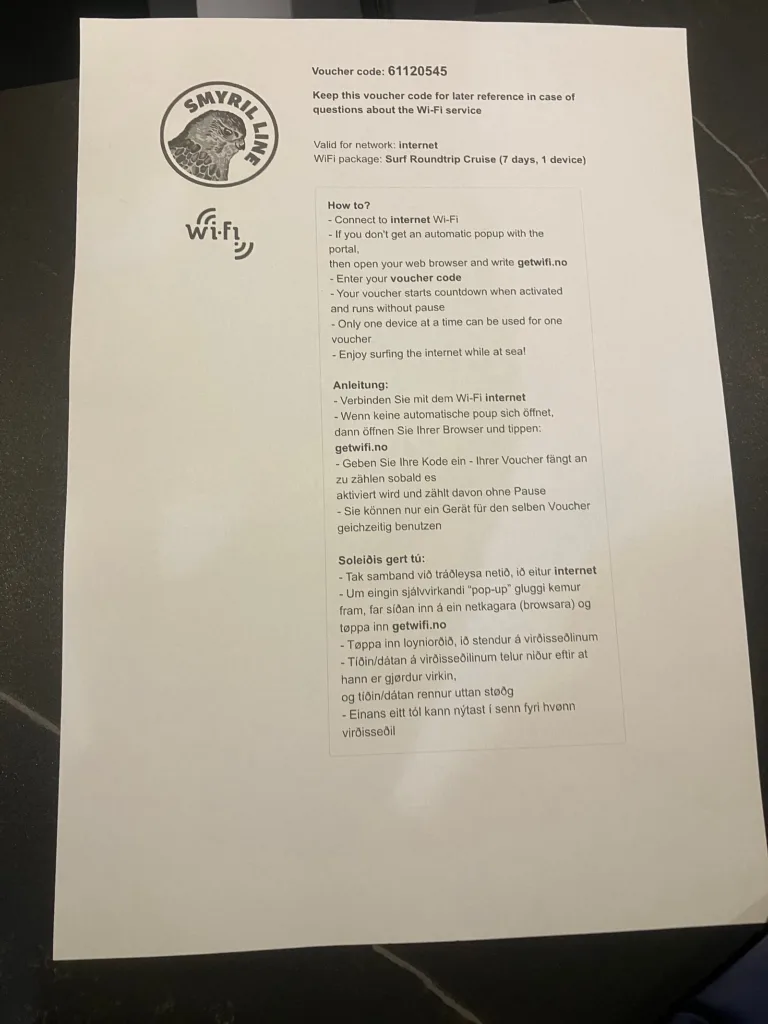
Does the ferry have internet?
Yes, you can buy it for different lengths of time. My partner still wanted to teach his classes, so we bought enough for the round drip for 35 euros. It can only be used on one device at a time.
Did the internet work? Yes and no. If he went to the top lounge, he could teach via What’s App. The closer to shore we were, the better it seemed (though I’m not sure why if it’s satellite-based). You can’t plan on streaming or plan on it being perfect.
Sensory Issue Ratings
Knowing what to expect before traveling is crucial for (late-diagnosed) autistic people and those with sensory sensitivities in general. I’ve included the most relevant sensory issues in this guide.
1. Vestibular: 5 out of 6 intensity

This varies depending on the weather, of course. But it’s a pretty intense vestibular experience!
2. Smell: 2 out of 6 intensity

Any time you have many people traveling together, this will be an issue. All it takes is one person wearing perfume. But in general, I found it just fine — there weren’t any noticeable chemical smells in the room, for example, and the airflow system worked well. Plus, you can almost always step outside into very fresh air.
3. Visual Clutter: 2 out of 6

The Norrona is mostly blessedly free of visual clutter, particularly in your cabins. Clean and minimal design.
Of course, plenty of people are wandering and moving about — not that people are clutter — but that can get exhausting if you’re in a lounge with plenty of people moving about.
4. Visual Delights: 6 out of 6

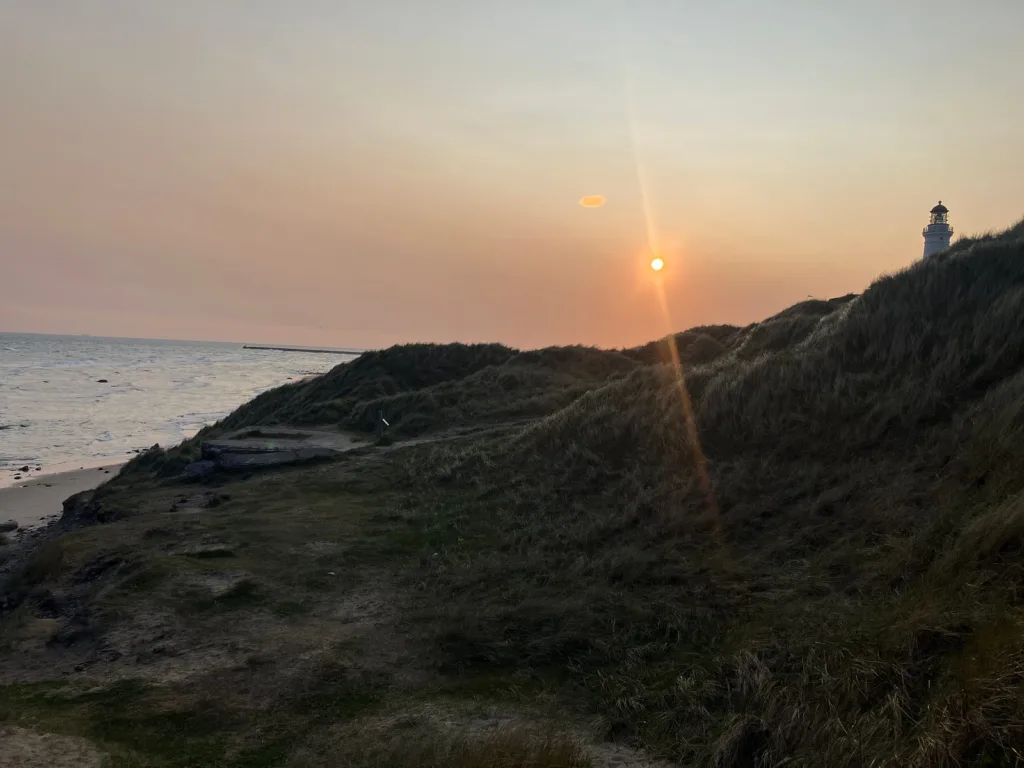
What can I say? This is the reason to take this ferry! Spectacular scenery.
5. Light Sensitivity: 2 out of 6

No major florescent nightmares stand out in any of the common areas. The rooms have pleasant lighting, and most of the time natural light filters in from outside (just put on your sunglasses).
6. Startle Reflex: 3 out of 6

This was not a major problem, but I made it a 3 because the announcements come via loudspeaker in your room. Unlike Amtrak sleepers, there’s no way to turn this off. It did set off my startle reflex when it happened. I suppose you could ask the crew for a written schedule and see if they can turn off the announcements in your room.
7. Auditory: 3 out of 6

When you’re in your rooms, it’s remarkably quiet. You cannot hear anyone else, although our cabin was below the football pitch, so we did hear people running upstairs.
In the common areas, it was pretty low-key in terms of sound. I only noticed music playing in the top-deck cafe. Everyone spoke in relatively quiet tones.
Other issues
Anticipatory anxiety: I know this is an issue for many autistic travelers — not knowing the sequence of events or wondering if there are hidden surprises. Anxiety about missing the boat, and so forth. I found the schedule to be admirably clear, and the staff were always available and helpful in answering questions. They also made it clear when to return to the ship if we were in a port.
Here are two places to improve:
Bottom Line: Recommend?
A qualified yes! If you can handle a relative amount of seasickness and can afford the deluxe cabin, go for it.
If you’re a hearty sailor without sensory issues, go for the cheaper cabin options.
It’s definitely a journey I’ll never forget or regret.
Happy sailing!