
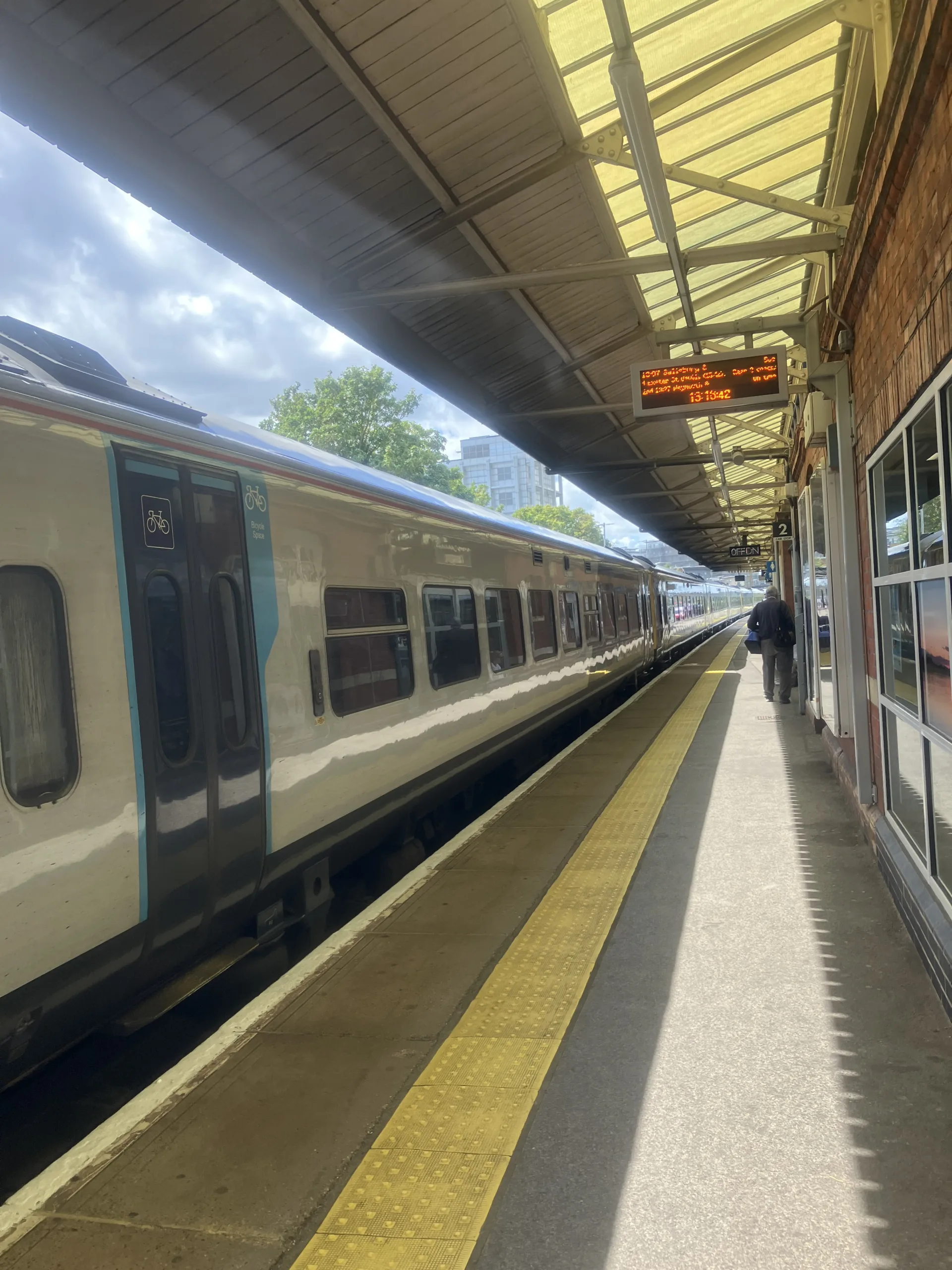
How To Pack a Sensory Kit For Train Travel
Train travel can be a sensory adventure.
Rusting cars.
Backyards full of children splashing around in little plastic pools on hot summer days.
A cat’s rear-end wiggling, ready to pounce on a creature hidden in the grass.
Industrial wastelands.
A cook enjoying a coffee and a cigarette behind the restaurant where they work.
People waving at the train as they paddle down a river.
The gentle rocking, quiet rhythm of the train, and its relentless push forward all add to the sense that you’ve stepped back in time.
Train travel is a unique sensory experience — stimulating and soothing — and can be enjoyable if you are prepared.
I’ve traveled with Amtrak across the United States many times since 1998, sleeping in coach for days and sometimes saving enough Amtrak miles for a sleeper. I’ve also spent plenty of sleepless and restful nights on overnight trains across Europe. Since you can’t be in a hurry, let’s focus on loving the ride.
Though we may have upwards of 53 senses, let’s focus on the most relevant areas for train travel: sight, temperature, sound, smell, space, vestibular, touch, and taste. If you’re a neurodivergent or highly sensitive person, this sensory kit is for you.
Vision & Lighting
If you’re traveling overnight, the train will usually dim its internal lights in the evening. However, it will still be enough to keep you awake if you’re light-sensitive.
What should you pack for this?
A hoodie: These block out unwanted light and vision distractions. And they’re warm, too. If you have to sleep somewhat upright, they also stay in place.
or
An eye mask or bandana: I’ve never been able to use eye masks because I feel trapped, but some people swear by them. Using a bandana or headband can also potentially double as a face mask.
or
Whatever you’re using for blankets: Yep. Just cover your face with your jacket, sweater, or shirt. Again, don’t worry if you look odd: that traveler bordering your coach at 2 am in Rugby, North Dakota, will probably look for another seat other than the one next to you! Remember the benefit: two seats to stretch out on if you don’t have a seatmate. And avoiding the dreaded snorer!
Sound
Speaking of snoring, how about sound?
Noise-canceling headphones and/or earbuds: I pack squishy over-the-ear headphones for audio and hardcore noise-canceling earbuds for sleep. I prefer the non-Bluetooth versions (I use QuietOn, 10% off with quietontraveler) because they don’t send Wi-Fi signals to your brain while you’re asleep.
Bonus: use headphones to listen to a great playlist as you watch the scenery go by.
Ambient earbuds: If you don’t want to walk around with your headphones or the total noise-canceling earbuds when you’re going to the dining car, you can use the kind drummers use to block out the most piercing noises.
Splurge on a sleeper: This isn’t something you can pack in your sensory kit, but if noise is your number-one nemesis, you might reserve a sleeper if you can afford it. If you’re having trouble justifying the price, remember that it’s a two-for-one deal: it’s like buying a plane ticket and a hotel all at once.
Temperature
The thermometer is rarely “just right” on the train. Especially if you’re like me with about a five-degree range of temperature comfort.
So yes, I’m advocating removing your packed clothes and using them as blankets. If this bothers you from a cleanliness perspective, then plan to wash them all when you arrive at your destination.
The other plus is that you can simulate a weighted blanket if that self-soothing technique works for you.
Knit hat: If you can wear a knit hat without itching, that’s another easy item for your sensory kit that takes up little space.
Smell
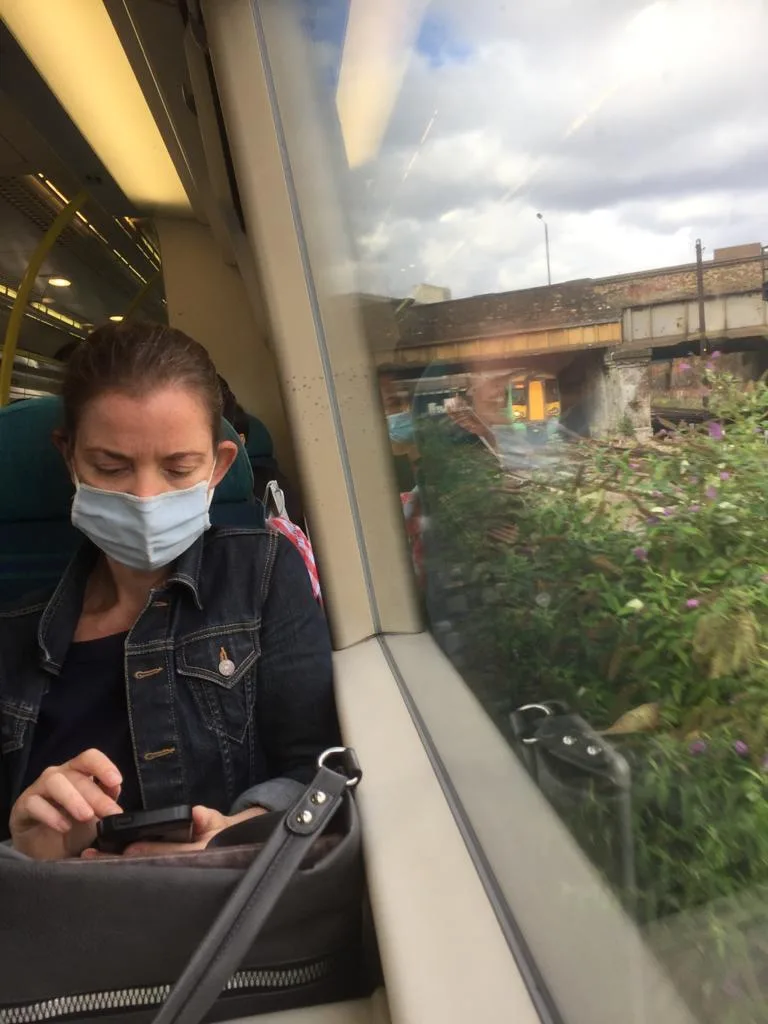
Olfactory issues are sometimes the hardest to anticipate when packing a train travel kit.
Amtrak often has a musty smell that doesn’t bother me. And I love the coffee smell in the tiny store on board.
But let’s be real. There are three major culprits:
- Body odor (that’s often why they blast the air conditioning at night on Amtrak in particular — see temperature above).
- Perfume-type fragrances.
- The bathroom.
Other than moving your seat in the first two instances — conductors will often accommodate you if they can — I have two suggestions for your sensory kit:
A face mask: These are socially acceptable now. You could also use that eye mask I suggested above in the sight category.
Your own essential oil: I’m not suggesting you douse yourself in the stuff because that will create a problem for another sensitive soul, but you could rub a little on your wrists or sniff it occasionally if there’s a cloying odor near you.
The biggest problem is the bathroom, especially because they tend to deteriorate during a multi-day trip. Use the face mask above and your essential oils. And hold your breath. I suppose you could also spray your essential oil in there if you have it in a spray bottle.
FYI: Some Amtrak routes on the east coast have sleepers with the toilet inside the compartment. I’m not kidding. I’ll say it’s convenient, but it makes me a little squeamish. Just make sure to check that if you’re sensitive to odors.
Space
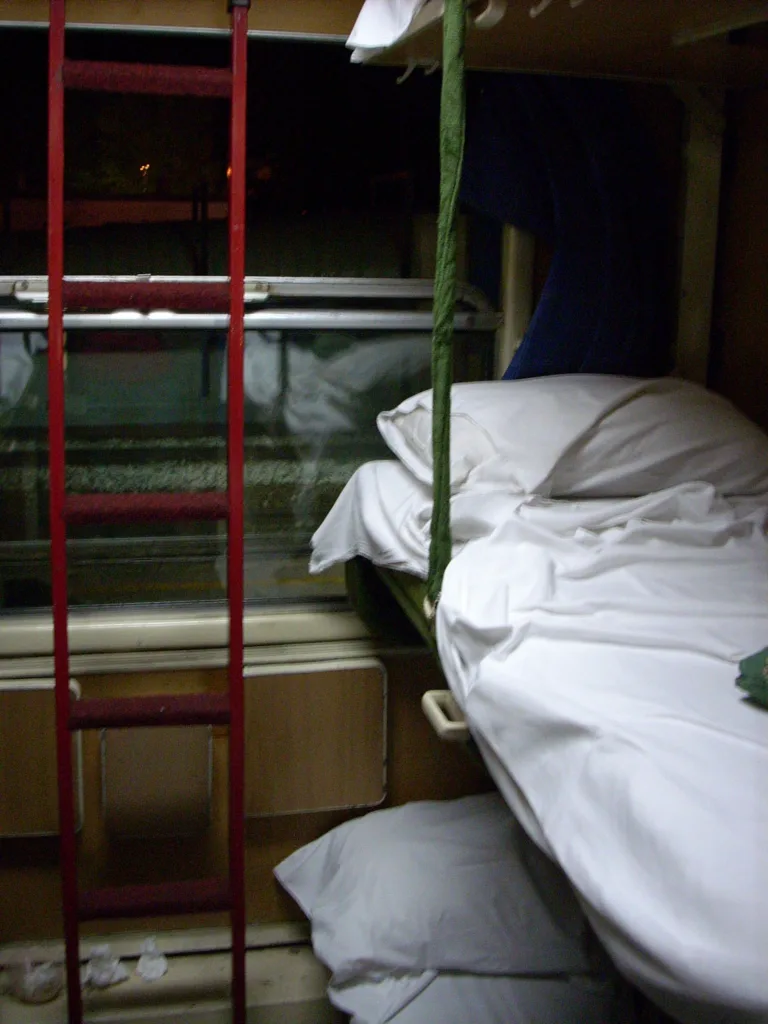
If you have issues with small spaces or confinement, then I’ve just saved you a shed-load of cash: you’ll want to ride in coach rather than a sleeper. That is unless you want to book a bedroom rather than a “roomette” as they call them on Amtrak. A roomette might be too small for you, especially if you share it with your traveling partner.
The downside to coach, however, is that you’ll often end up with someone next to you. If you’re bothered by this, consider traveling with a friend or booking a bedroom sleeper.
If you decide to ride coach, then I recommend this technique if the train is becoming full:
Pretend to be asleep and have your bag on the seat beside you.
It may be antisocial, but I’ve always been a magnet for people feeling comfortable sitting next to me. So I feel perfectly justified if I’m traveling across the country while other train passengers often go just a few stops. I won’t do this if the train is too crowded; however, it’s helpful to use this technique at night for better sleeping space.
Vestibular

The big culprit here will probably be motion sickness, a lovely collaborative project brought to you by your vestibular and visual senses.
As far as travel goes, trains are generally much better than cars or boats, for example. It’s much easier to keep your line of vision steady.
I have had short bouts of train motion sickness because I bent my head over while rummaging in my bag. I obviously wouldn’t recommend long-distance train travel if you know trains cause motion sickness for you (I presume you know who you are!).
However, here are three intriguing ways to deal if it happens sporadically.
1. Wrist bands: While the scientific evidence is inconclusive, the idea behind wrist bands comes from acupuncture and theories of pressure points. I’ve used them with some success on boats.
2. Magic mirror visualization: My mother used this for morning sickness, and I swear by it whenever I have any kind of nausea. It may sound weird now, but perhaps you’ll thank me the next time you get queasy.
First, you imagine a large mirror. Then you imagine that mirror sliding into your torso. As you do so, you picture all the nausea (whatever that looks like in your mind’s eye) staying below the mirror, somewhere in your abdomen. Hold that image in your mind, with the little nauseas floating below your stomach and below the mirror. The key is to focus on what’s happening above the mirror in your torso. It’s free from the nausea. This technique requires concentration, but it is a short-term fix that works.
3. Motion sickness glasses: The jury is still out on this one, and I haven’t tried it, nor do I know anyone who has. I cannot say I’ve seen anyone ever using them. If you have tried them, let me know!
Touch
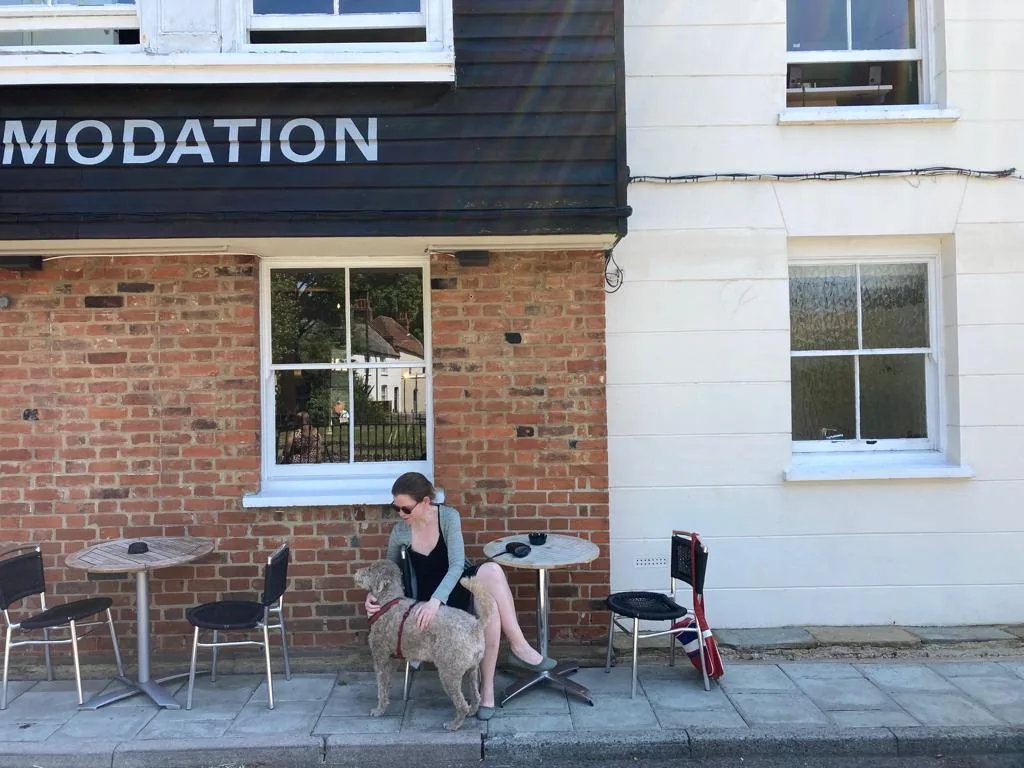
Since this is a vast category, let’s divide it into two: affective and discriminative touch:
“Discriminative touch conveys signals about pressure, vibration and stretching of the skin. These signals shoot along thick ‘type A’ nerve fibers, or ‘afferents,’ at speeds of more than 200 miles per hour to the brain’s sensory regions.
Affective touch signals, meanwhile, travel slowly via thinner ‘type C’ afferents and communicate pain, itch and temperature; the variety of type C nerve fibers that communicate touch — called C-tactile fibers — register in emotion centers in the brain.” — George Musser, Spectrum, Science
Discriminative touch
Snug and loose-fitting clothing: I already discussed creating your own makeshift weighted blankets (bring one if you can fit it in your bag). Beyond that, you know best whether loose or tight clothing will soothe you. I like both at different times and therefore have both in my bag.
Textures: Train seats are often covered in a dreadful scratchy material. Amtrak also puts those useless dryer-sheet-like paper on the headrests. In anticipation of this, you might pack:
1. A favorite pillowcase. Stuff it with your clothes and use it as a pillow to cover the headrest.
or
2. A jacket or sweater. Just drape this over the headrest.
This should spark ideas about other items to pack in this category.
Affective Touch
Trains are among the easiest means of transport to avoid affective touch. People are generally less hurried and therefore have more spatial awareness as they move about the train or sit in their seat. Seats are larger than airplanes or even buses, so you can usually avoid touching your seatmate.
I recommend getting a window seat, if possible. Train aisles can be narrow so people can brush past you as they walk by.
Taste

Last but certainly not least: food and beverages!
This includes hunger, thirst, and related bodily sensations. I’ll try to address a bit of both.
Packing and buying food for your sensory kit
Like Paul Micallef, I eat the same thing every day, and replicating this on a multi-day train journey provides a sense of stability — and also keeps my body feeling better.
Because I live on the road and often have limited energy or places to cook, my routine usually involves food that doesn’t require cooking. To the degree you can transition into this kind of routine if you’re on the road long-term, it will help keep that sense of stability.
The other issue for multi-day train travel is refrigeration. If you’re not traveling long term, but your train trip is epic (e.g., Seattle to Boston), you might bring a small cooler bag for the first part of the trip. Frozen berries can be used as food and a cooler for other things like cheese.
Though what food you’ll pack will differ from my shopping list, let’s consider some general qualities:
1. Non-perishable: You know the drill, though you can bring a delicious perishable item for your first meal.
2. Food that doesn’t need washing: Oranges instead of apples. Avocados instead of grapes. Peeled baby carrots instead of regular carrots.
3. Fruit: Fruit is refreshing on a multi-day train journey.
4. Self-contained items: Certain cheeses, nuts, crackers, and so forth. It’s similar to packing food for hiking, except it’s much easier because you don’t need to consider weight as much.
5. Avocados rule: If you can find them and if you like them. Eat them with a tiny spoon or spread them on crackers.
6. Boring food: This sounds odd, but if you bring your favorite crackers with you, it might tempt you to eat them all — and then you’ll run out!
On to utensils and such:
1. A tiny metal spoon: Though I love the idea behind them, sporks are too large and generally useless. A tiny spoon is easy to clean, and it can double as a dull knife (make sure you find one with thin edges).
2. Paper towels or napkins: You’ll be glad you had these multipurpose items.
3. Hand sanitizer/biodegradable wet wipes: If you eat an orange in your seat, you won’t want to walk downstairs to the bathroom to clean your sticky hands, will you?
If you’re wondering about cups, fear not. We’re moving onto the vitally important beverage category now.
Packing and buying beverages for your sensory kit
Keeping yourself hydrated on a multi-day train journey is imperative and makes the liquid end of packing more complicated than food.
Hydration: Consider whether you never seem to know when you’re thirsty or if you’re thirsty all the time. Make sure you pack water in your sensory kit and plenty of it.
Occasionally, trains will have water dispensers for your water bottles (I tried it once on Amtrak with disastrous consequences — it was truly vile). If you’re on a budget, you may need to buy one or two-liter bottles to carry with you on the train. Water can be expensive to buy on the train.
Hot beverages: I also have two small thermoses with me because I love tea and coffee. One has a cup of its own, so that solves that problem. You often get double paper cups if you buy coffee or tea on the train, so you can also use one of those as your cup throughout the trip.
Assuming you brought hot tea or coffee in your thermos, we know that will disappear quite soon. So what happens when you wake up the next morning craving coffee?!
1. DIY: This works if you have a sleeper. I don’t recommend doing this in coach, as a train attendant might frown on it. You’ll need a hot water immersion coil or even a tiny tea kettle. You can plug it in and hold it steady on a surface while it heats. The key is to hold it steady in case the train halts suddenly or lurches to the side.
You don’t want to try this with your metal thermos (!), so you’ll need a paper cup you bought from the food cart or brought with you. Sometimes they’ll just give you a cup for free if you ask for it.
Then you can add your instant coffee or tea, and Bob’s your proverbial.
2. Hand-held machine: An advanced option I’ve used is the Handpresso machine. It’s too heavy for me to carry now that I live on the road, but it worked well when I had a home base. I know there are more options on the market now for manual or electric (battery) coffee options out there. Some people swear by the AeroPress, but I haven’t used it.
You could also try a pour-over method if you have the gear for it (see the above notes about immersion coils). Coffee fiends know who they are, so here’s the main packing point: if you need coffee, think about how you can make it yourself in advance rather than relying on the whims of the particular train setup.
3. Buy on board: The trick is to find out if this is possible. I wake up very early — particularly on a train — so I don’t want to wait four hours for the lounge car to open for a coffee.
4. Buy at a stop: This is an advanced strategy, one that works on Amtrak but not on long-distance European trains (that rarely stop for more than 15 minutes). On Amtrak, there are key spots where you’ll have thirty to sixty minutes to get off the train. If you time it right, you can find a wonderful coffee place near the station (I’ve done this in Minneapolis, Chicago, Denver, and a few other places).
If you have 15 minutes or more, it’s fun to get off the train to see what goodies you can find — it becomes an adventure in itself. Or, if you’re really into planning, you can research what’s available beforehand (you might not get a Wi-Fi signal on the train). For example, there’s an ice-cream bar machine inside a small station in Montana. Oh, how I used to look forward to that stop.
Be cautious, however: you don’t want to be left behind at the station while you’re enjoying your latte!
A Travel Sensory Kit Checklist

Let’s make this useable, shall we?
You can download the full sensory kit checklist (no signup involved).
Now you’re ready for your next train adventure.
Happy packing and planning!